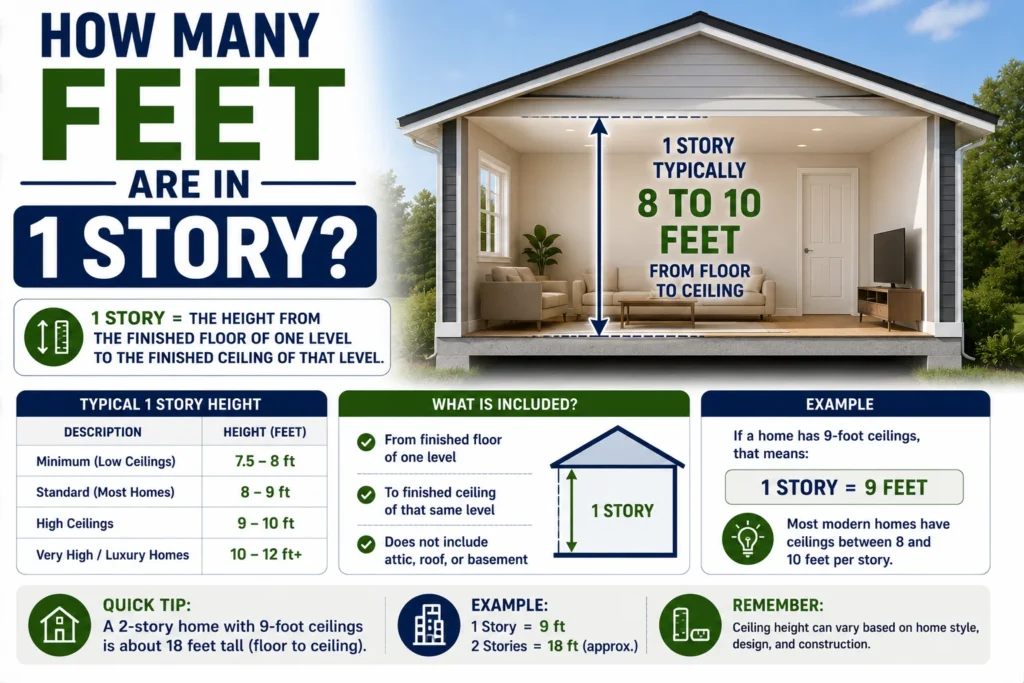
How Many Feet Are in 1 Story? Average Building Height
If you’re wondering how many feet are in 1 story, there isn’t one exact number…
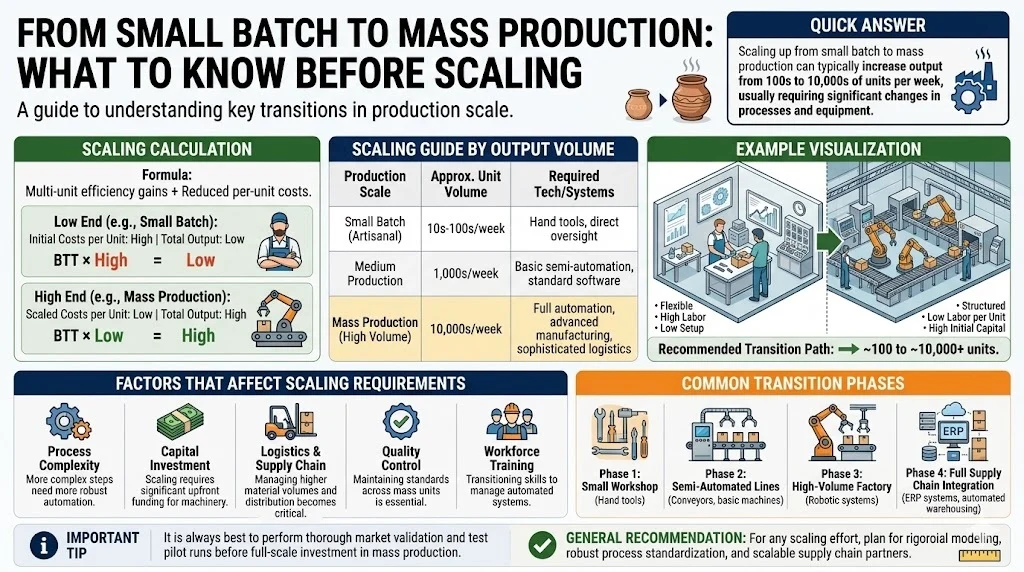
Moving from small batch manufacturing to mass production is one of the biggest transitions a business can make. What works when producing 50 or 100 units often breaks down when producing thousands.
Scaling successfully requires more than increasing quantity. You need systems, consistent quality, reliable suppliers, cost control, and production planning.
This guide explains the most important things to know before making the leap.
Small batch production means manufacturing products in limited quantities.
Characteristics include:
Small batch production is common for:
Mass production means manufacturing products at large scale using standardized processes.
Characteristics include:
Mass production is used when:
In small batch production, you can fix issues manually.
In mass production, problems multiply quickly.
A small defect in one unit can become:
That’s why scalable systems matter more than creativity at this stage.
Before mass production, confirm that customers truly want the product.
Important signs include:
Scaling too early is one of the most common manufacturing mistakes.
A design that works for handmade production may fail in factory manufacturing.
Your product should be:
Factories prefer products with:
Mass production requires precise documentation.
Important documents include:
Without documentation, consistency becomes difficult.
Many businesses assume mass production is automatically cheaper.
While the cost per unit decreases, overall expenses rise dramatically.
You may need to pay for:
Cash flow planning becomes critical.
Factories often require a minimum order quantity.
Examples:
Higher MOQs usually reduce per-unit costs but increase inventory risk.
Balancing volume and demand is extremely important.
In small batches, quality control is usually manual.
In mass production, you need structured inspection systems.
Common quality checkpoints:
Good quality systems prevent large-scale defects.
Your supplier becomes a long-term operational partner.
Choose suppliers carefully based on:
A weak supplier can delay your entire business.
Scaling too quickly can hurt quality.
Common problems during rapid scaling:
Growth should be controlled and measurable.
Small inventory is easy to manage.
Large inventory introduces:
You need systems for:
Packaging is often overlooked during scaling.
Mass production packaging must:
Efficient packaging reduces logistics costs significantly.
As production grows, shipping becomes a major operational factor.
You must manage:
Shipping delays can disrupt sales and inventory planning.
Manual processes eventually limit growth.
Businesses often introduce:
Automation improves:
Mass production often requires legal compliance.
Depending on the product, you may need:
Requirements vary by country and industry.
You cannot manage mass production alone.
As operations grow, businesses usually need:
Strong operations teams support sustainable scaling.
Before full-scale manufacturing, many companies run pilot production.
Pilot runs help test:
This reduces costly mistakes later.
Producing too much inventory without proven demand.
Low price often leads to poor quality.
Small defects become massive losses at scale.
Large production requires large upfront spending.
Complex products are harder and more expensive to manufacture.
| Small Batch | Mass Production |
|---|---|
| Flexible | Standardized |
| Higher unit cost | Lower unit cost |
| Easier customization | Limited customization |
| Manual processes | Automated systems |
| Low inventory risk | High inventory risk |
| Fast changes possible | Changes are expensive |
Maintaining consistent quality while increasing output.
Per-unit cost is lower, but total operational costs are much higher.
After validating demand and stabilizing product quality.
Factories optimize production efficiency through larger runs.
Yes, many startups transition gradually through pilot manufacturing.
Moving from small batch manufacturing to mass production is a major operational shift. Success depends on preparation, systems, quality control, supplier relationships, and realistic scaling.
Businesses that scale carefully usually:
The smartest path to scaling is:
That process reduces risk and creates a stronger foundation for long-term manufacturing growth.
If you’re wondering how many feet are in 1 story, there isn’t one exact number…

If you’ve ever wondered how many feet do low beam headlights illuminate, the answer depends…
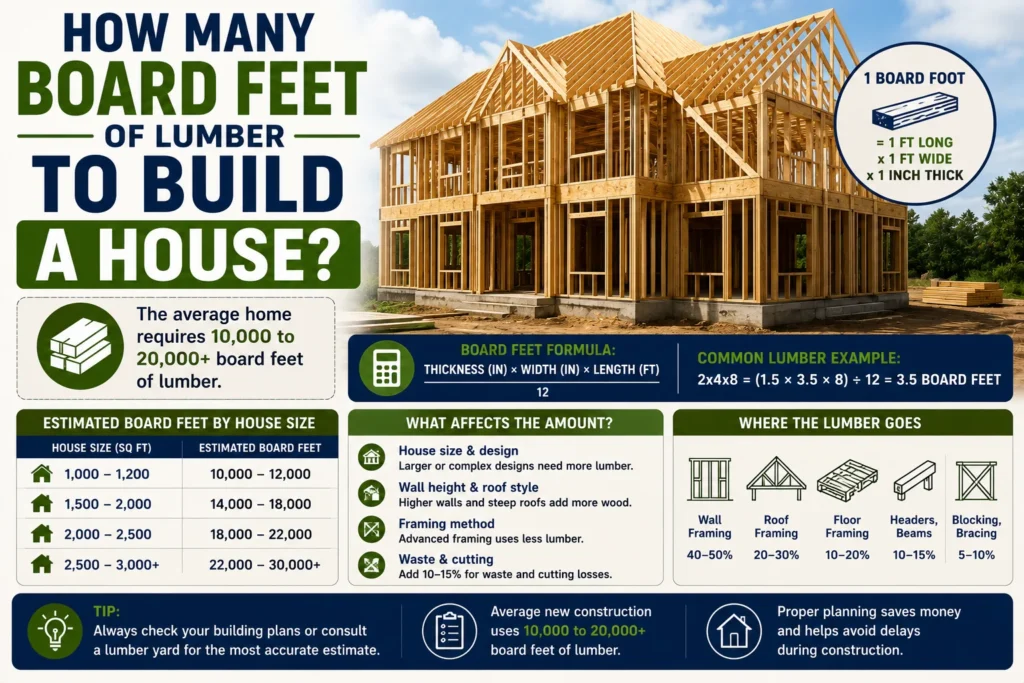
If you’re planning to build a house, one of the most important material questions is…