

If you’re using a portable or standby generator during a power outage, you may wonder: how many feet should a generator be from the house?
The general safety recommendation is:
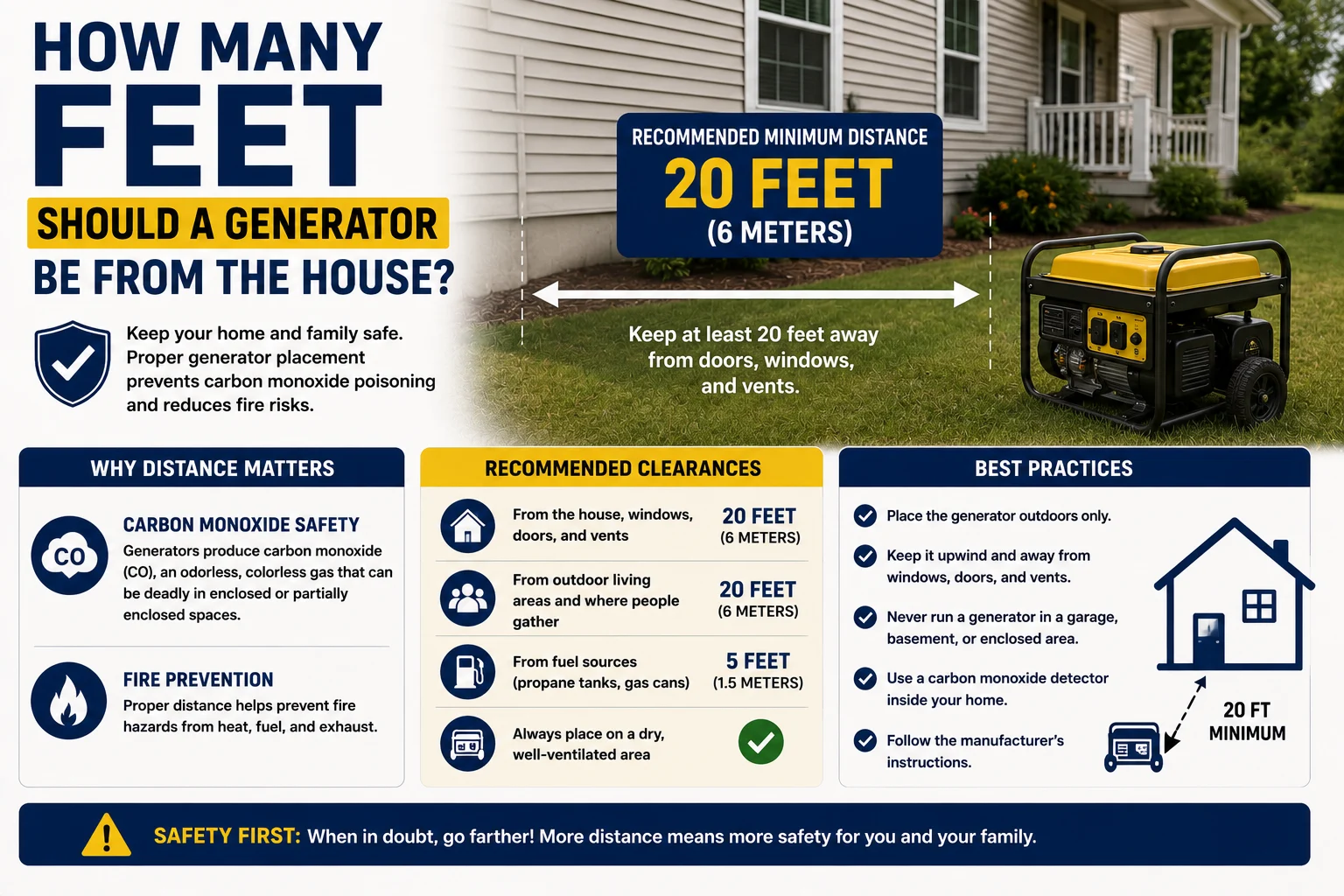
Place a portable generator at least 20 feet away from your home.
Generators should also be positioned away from:
- Doors
- Windows
- Vents
- Garages
- Crawl spaces
Proper placement helps reduce the risk of carbon monoxide poisoning, fire hazards, and overheating.
In this guide, you’ll learn the recommended generator distances, safety rules, and best practices for generator placement.
Quick Answer: Recommended Generator Distance
For most portable generators:
- Minimum recommended distance: 20 feet from the house.
- Keep the exhaust pointed away from the building.
- Never operate a generator indoors.
Some manufacturers may specify slightly different distances, so always check your owner’s manual.
Why Does a Generator Need to Be Far From the House?
Generators produce carbon monoxide (CO), an odorless and potentially deadly gas.
Keeping the generator away from your home helps prevent:
- Carbon monoxide buildup.
- Fire risks.
- Heat damage.
- Noise problems.
Even partially enclosed spaces can trap dangerous gases.
Recommended Generator Distances
| Area | Recommended Distance |
|---|---|
| House walls | 20 feet |
| Doors and windows | 20 feet |
| Garage openings | 20 feet |
| Air vents | 20 feet |
| Neighboring structures | Follow local codes |
Always follow the manufacturer’s instructions and local regulations.
Portable Generators vs. Standby Generators
Portable Generators
Portable generators usually require:
- At least 20 feet of clearance.
- Outdoor operation only.
- Adequate ventilation.
Standby Generators
Permanent standby generators often have different requirements.
Many manufacturers allow installation:
- Approximately 5 feet from the house.
However, local building codes and utility regulations may vary.
Why Carbon Monoxide Is Dangerous
Carbon monoxide is:
- Colorless.
- Odorless.
- Highly toxic.
Exposure can cause:
- Headaches.
- Dizziness.
- Nausea.
- Confusion.
- Loss of consciousness.
Never assume that an open garage or covered patio provides enough ventilation.
Places You Should Never Put a Generator
Never place a generator:
- Inside a garage.
- Inside your home.
- Under a deck.
- Near windows.
- In a basement.
- In a shed without proper ventilation.
Generators must always operate outdoors.
Generator Placement Tips
To use your generator safely:
- Keep it on a flat surface.
- Protect it from rain using a generator cover.
- Point the exhaust away from buildings.
- Install carbon monoxide detectors inside your home.
- Read the owner’s manual carefully.
Good placement improves both safety and performance.
Local Building Codes and Regulations
Generator installation requirements vary depending on:
- City regulations.
- Utility company rules.
- Homeowners associations.
- Manufacturer specifications.
Always check local codes before installing a standby generator.
Common Generator Safety Mistakes
Avoid these common mistakes:
- Running the generator in a garage.
- Placing it too close to windows.
- Using indoor extension cords outdoors.
- Ignoring maintenance.
- Refueling while the generator is running.
Following safety guidelines can prevent serious accidents.
FAQs
How many feet should a portable generator be from the house?
Most safety experts recommend placing it at least 20 feet away.
Can I run a generator in my garage with the door open?
No. Generators should never be operated in a garage, even with the door open.
How far should a generator be from windows?
Keep generators at least 20 feet from windows and doors.
Can a standby generator be closer to the house?
Yes. Some standby generators can be installed approximately 5 feet away, depending on local codes and manufacturer guidelines.
Why must generators be kept outside?
Generators produce carbon monoxide, which can build up indoors and become deadly.
Can I put a generator under a covered patio?
Generally, no. It still needs proper ventilation and clearance.
Should the exhaust face the house?
No. Always point the exhaust away from your home and neighboring buildings.
Quick Facts
- Portable generators should be at least 20 feet from the house.
- Keep generators away from windows, doors, and vents.
- Never operate a generator indoors.
- Standby generators may have different installation requirements.
- Carbon monoxide detectors add an extra layer of protection.
Final Thoughts
For most portable generators, the safest choice is to place the unit at least 20 feet away from your house with the exhaust directed away from doors and windows.
Because generator requirements vary by model and location, always read the manufacturer’s instructions and follow local building codes before installation or use.