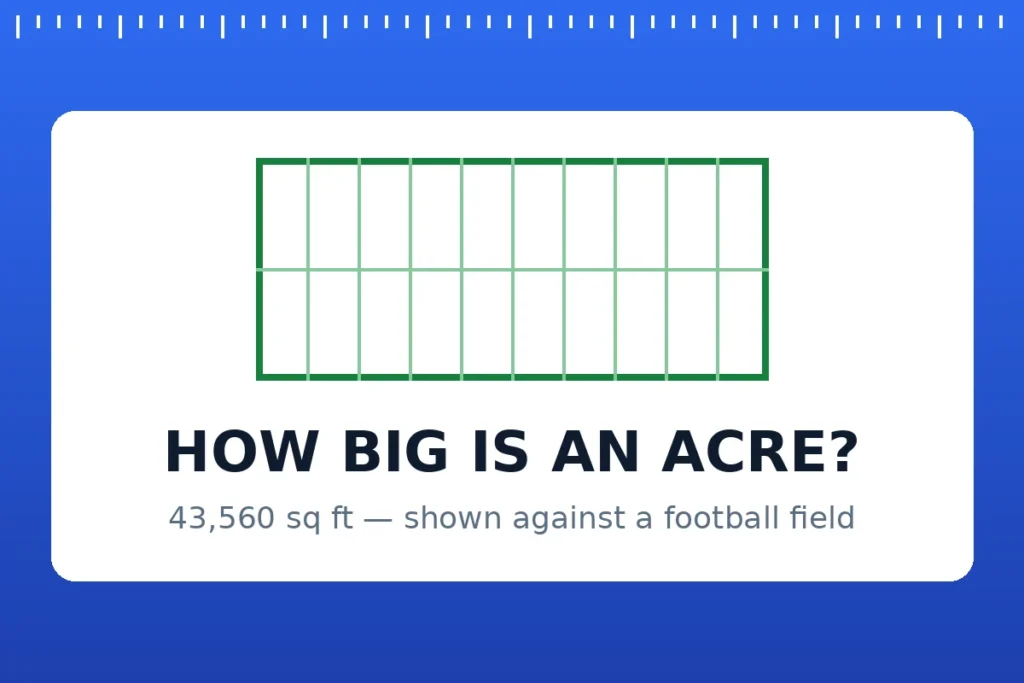
How Big Is an Acre? Visual Guide with Comparisons
Every property listing uses the same phrase: “set on a one-acre lot.” It sounds generous…
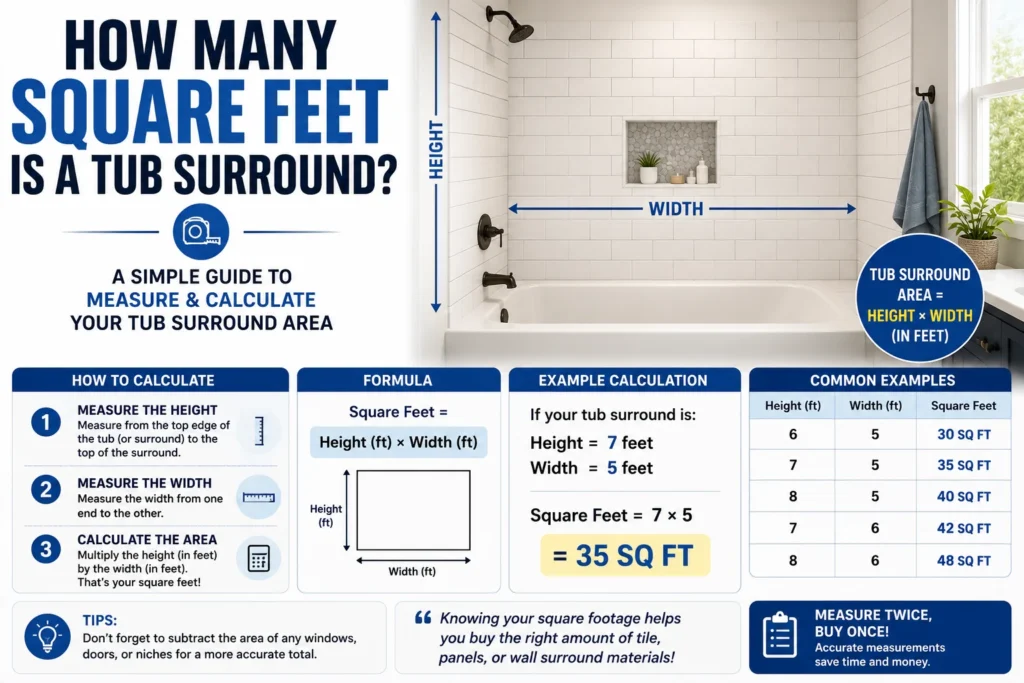
If you’re remodeling a bathroom or planning a tile project, you may wonder: how many square feet is a tub surround?
The answer depends on the size of your bathtub and the height of the walls, but a standard tub surround is usually between 60 and 80 square feet.
Most standard bathtubs measure:
A typical three-wall tub surround covers approximately 60–70 square feet.
In this guide, you’ll learn how to calculate the square footage of a tub surround and estimate how much tile or material you’ll need.
Typical tub surround sizes include:
| Tub Size | Approximate Square Footage |
|---|---|
| Small surround | 50–60 sq ft |
| Standard surround | 60–70 sq ft |
| Large surround | 70–80 sq ft |
Most homeowners need about 60 square feet of tile or wall panels.
A standard bathtub usually measures:
The surround includes:
To find the area of each wall, use:
The formula is:
Square Feet = Length × Height
For a standard tub:
5 ft × 6 ft = 30 square feet
2.5 ft × 6 ft = 15 square feet each
30 + 15 + 15 = 60 square feet
Therefore:
A standard tub surround covers approximately 60 square feet.
| Tub Dimensions | Approximate Surround Area |
| 60 × 30 inches | 60 sq ft |
| 60 × 32 inches | 62 sq ft |
| 66 × 32 inches | 68 sq ft |
| 72 × 36 inches | 80 sq ft |
Larger soaking tubs and whirlpool tubs require more material.
Most contractors recommend buying:
For a 60-square-foot surround:
Extra tile accounts for:
Common tub surround materials include:
A 60-square-foot tub surround is approximately the same size as:
This helps homeowners visualize the amount of material needed.
Tub surround dimensions can vary depending on:
Always measure your specific bathroom before ordering materials.
Costs vary depending on the material:
| Material | Average Cost |
| Acrylic surround | $300–$1,000 |
| Ceramic tile | $500–$2,000 |
| Porcelain tile | $700–$3,000 |
| Natural stone | $1,500+ |
Labor costs may increase the total project price.
A standard tub surround usually covers about 60 square feet.
Multiply each wall’s length by its height and add the totals.
Most projects require 60–70 square feet of tile.
A typical surround measures approximately:
Yes. Experts recommend purchasing 10–15% extra.
Large surrounds can cover 70–80 square feet or more.
Yes. Shelves and niches can slightly increase material requirements.
A standard tub surround typically covers about 60 square feet, although larger tubs may require 70–80 square feet of tile or wall panels.
Before purchasing materials, carefully measure your bathroom and add extra coverage for cuts and future repairs.
Every property listing uses the same phrase: “set on a one-acre lot.” It sounds generous…
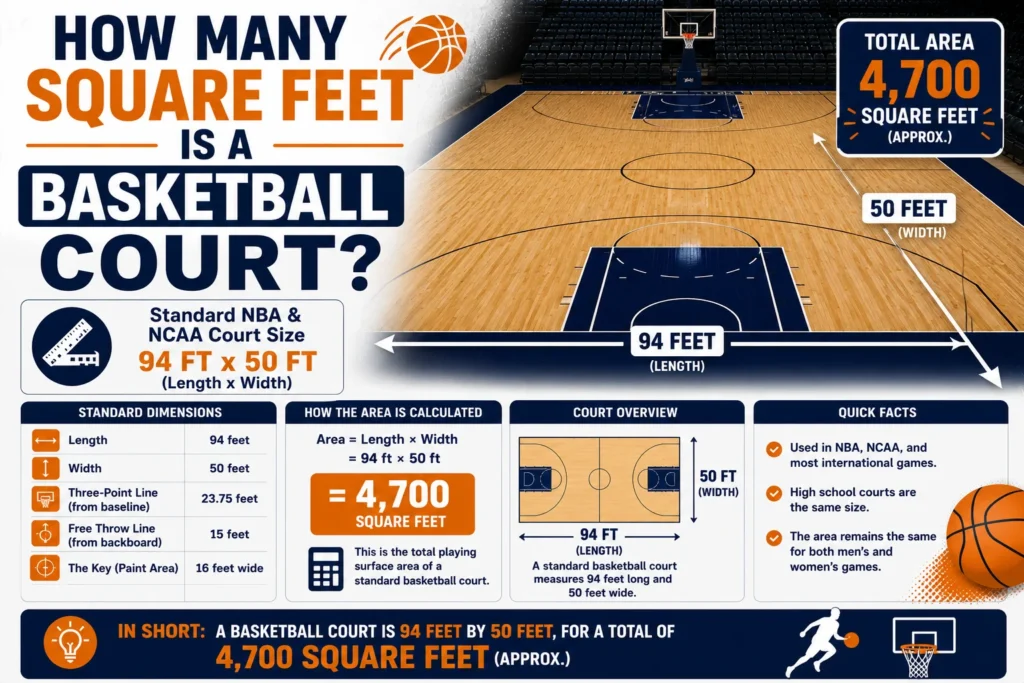
If you’re planning to build a basketball court, comparing gym sizes, estimating flooring requirements, or…
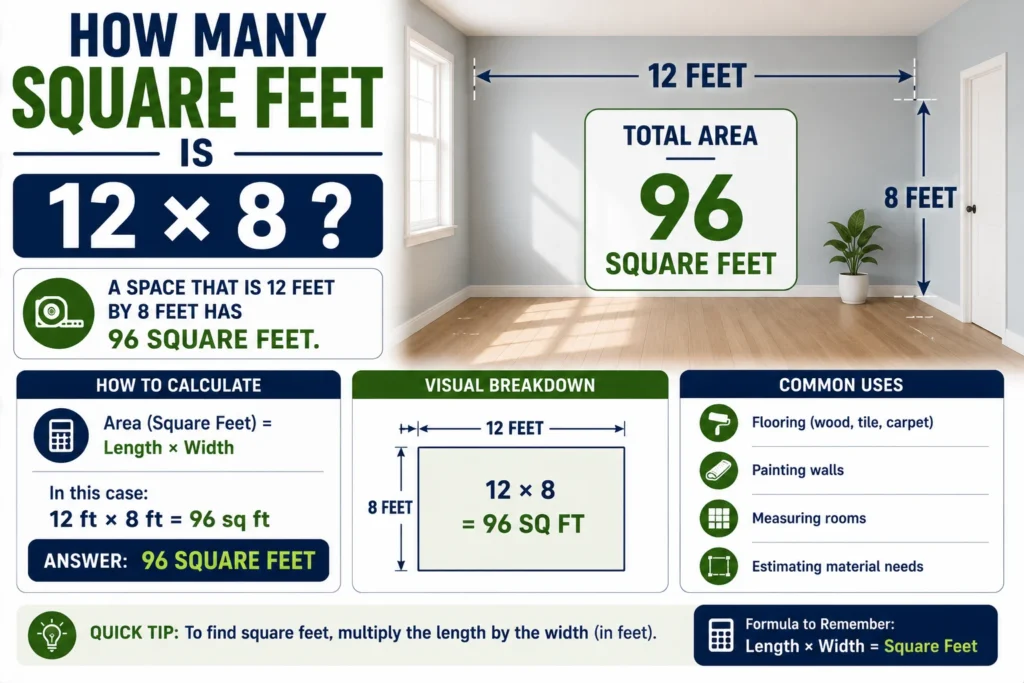
If you’re trying to determine how many square feet is 12 × 8, the calculation…