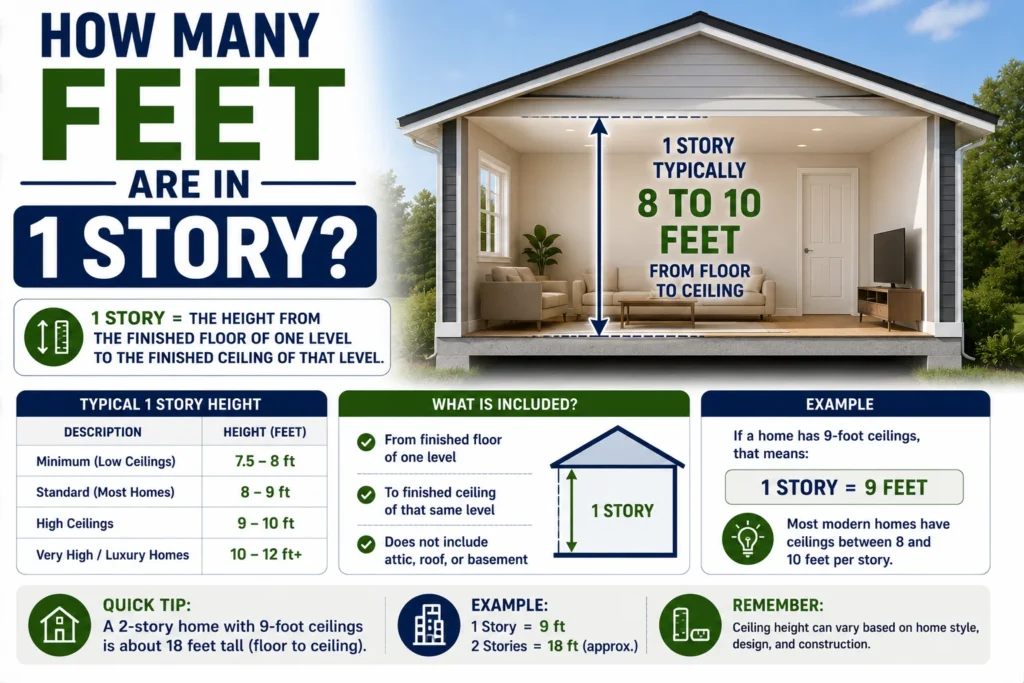
How Many Feet Are in 1 Story? Average Building Height
If you’re wondering how many feet are in 1 story, there isn’t one exact number…
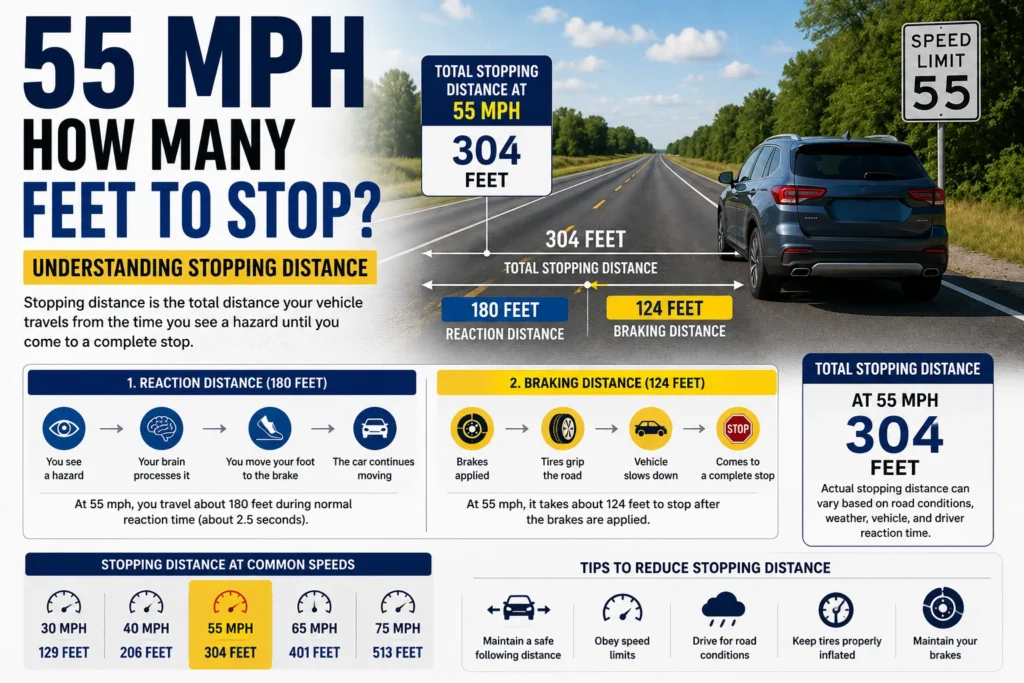
If you’re studying for a driver’s test, learning road safety, or simply curious about vehicle stopping distances, you may wonder: How many feet does it take to stop at 55 mph?
Under normal driving conditions, a car traveling at 55 miles per hour typically needs about 265 to 300 feet to come to a complete stop.
However, the exact stopping distance depends on several factors, including:
Understanding stopping distance is essential because it helps drivers maintain safe following distances and avoid collisions.
In this guide, you’ll learn how stopping distance is calculated and why vehicles require so much space to stop at highway speeds.
At 55 mph, the average stopping distance is approximately:
The total stopping distance includes:
Therefore:
A vehicle traveling at 55 mph generally requires around 265–300 feet to stop safely.
Stopping distance is the total distance your vehicle travels from the moment you notice a hazard until the car comes to a complete stop.
Stopping distance has two parts:
The formula is:
Stopping Distance = Reaction Distance + Braking Distance
Reaction distance is the distance your vehicle travels while your brain recognizes a danger and your foot moves to the brake pedal.
At 55 mph:
Calculation:
81 × 1.5 ≈ 121 feet
Therefore:
Reaction distance at 55 mph is about 120 feet.
Braking distance begins when you press the brake pedal and ends when the vehicle stops completely.
Under normal conditions:
Combined with reaction distance:
Total stopping distance:
Approximately 265–300 feet.
| Component | Distance |
|---|---|
| Reaction distance | 120 ft |
| Braking distance | 145–180 ft |
| Total stopping distance | 265–300 ft |
To understand stopping distances, it helps to convert miles per hour into feet per second.
Formula:
Feet per second = MPH × 1.467
Calculation:
55 × 1.467 = 80.7 feet per second
Therefore:
A car traveling at 55 mph moves about 81 feet every second.
Many things can increase or decrease the distance needed to stop.
Distracted or tired drivers may react more slowly.
Rain, snow, and ice significantly increase stopping distances.
Worn tires provide less traction.
Old or damaged brakes reduce stopping performance.
Heavier vehicles usually require more distance to stop.
Wet roads and gravel roads increase braking distance.
| Speed | Approximate Stopping Distance |
| 25 mph | 85 ft |
| 35 mph | 136 ft |
| 45 mph | 195 ft |
| 55 mph | 265–300 ft |
| 65 mph | 360 ft |
| 70 mph | 400+ ft |
As speed increases, stopping distance increases dramatically.
The average passenger car is about:
Calculation:
300 ÷ 15 = 20
A car traveling at 55 mph may need:
18–20 car lengths to stop.
Yes. Three hundred feet is roughly equal to:
Many drivers underestimate how far their vehicle travels before stopping.
Driving experts often recommend the three-second rule.
At 55 mph:
In poor weather:
This extra space gives you more time to react.
You can improve safety by:
Good driving habits help reduce accident risk.
Most vehicles need approximately 265–300 feet to stop at 55 mph.
A vehicle traveling at 55 mph moves about 81 feet per second.
Reaction distance is approximately 120 feet.
Factors include:
Yes. Wet roads can significantly increase braking distance.
A car traveling at 55 mph may require 18–20 car lengths to stop.
Yes. Larger and heavier vehicles usually need more distance to stop.
A vehicle traveling at 55 mph typically needs between 265 and 300 feet to stop, depending on road conditions, reaction time, and vehicle performance.
Because a car moves about 81 feet every second at 55 mph, maintaining a safe following distance and staying alert are essential for preventing accidents and driving safely.
If you’re wondering how many feet are in 1 story, there isn’t one exact number…
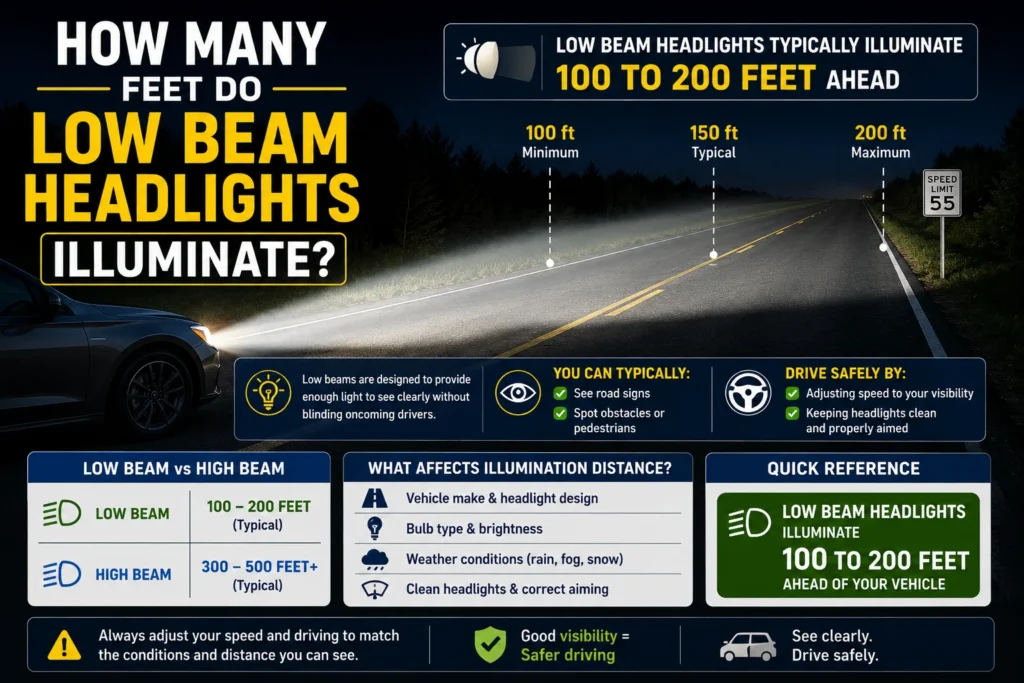
If you’ve ever wondered how many feet do low beam headlights illuminate, the answer depends…

If you’re planning to build a house, one of the most important material questions is…