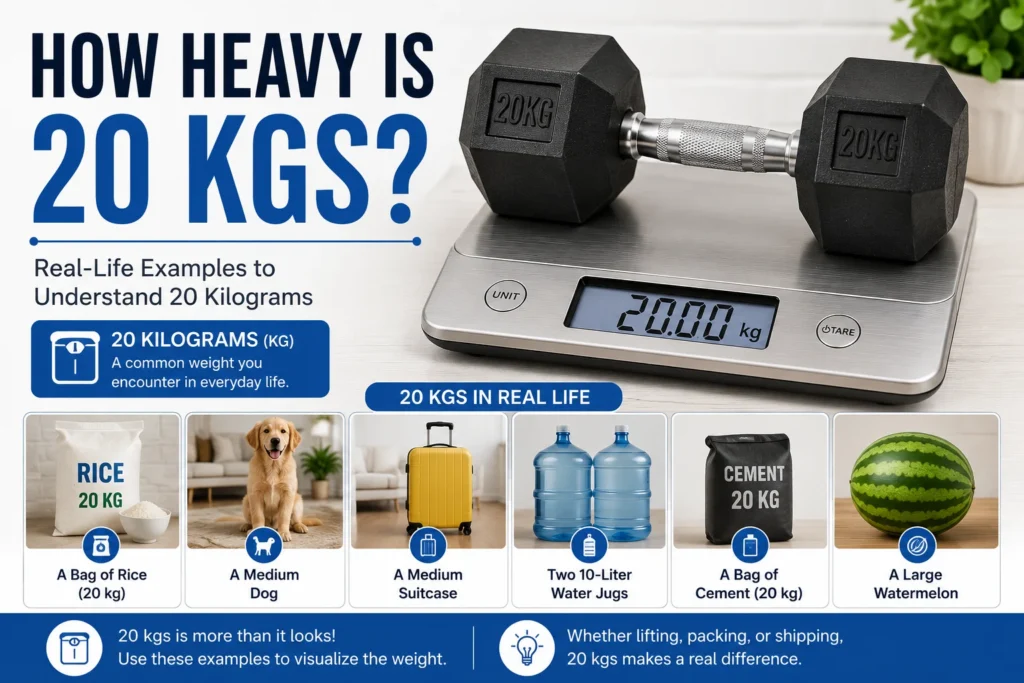
How Heavy Is 20 Kgs? Real-Life Weight Comparisons and Examples (2026)
If someone tells you that an object weighs 20 kilograms (kgs), it can be difficult…

Heave a cabin suitcase into the overhead bin, or wrestle a big bag of rice from the trolley into your car, and you are handling almost exactly 10 kilograms. It is one of the most common “real” weights in daily life — heavy enough to respect, light enough to carry. Here is what 10 kg converts to, what it looks like in objects you already know, and how it feels in your hands.
Quick Answer: 10 kg equals 22.0462 pounds — that is 22 lb 0.74 oz, or about 1.57 stone (roughly 1 stone 8 lb). In grams it is simply 10,000 g.

The conversion rests on one number: 1 kilogram = 2.20462 pounds. So 10 kg × 2.20462 = 22.0462 lb. As pounds and ounces: the whole pounds are 22, and the leftover 0.0462 × 16 ounces comes to about 0.74 oz — call it 22 lb and three-quarters of an ounce. In stone, divide by 6.35029 (one stone is 6.35 kg): 10 kg = 1.5747 stone, which is 1 stone plus about 8 pounds.
Going the other way, divide pounds by 2.20462 to get kilograms. The same sum runs the whole family of our kilogram guides, from what weighs 10 kilograms up to the bigger loads below.
| Kilograms | Pounds | Good mental picture |
|---|---|---|
| 1 kg | 2.20 lb | A litre bottle of water |
| 5 kg | 11.02 lb | A large bag of potatoes |
| 8 kg | 17.64 lb | A full laundry basket |
| 10 kg | 22.05 lb | A packed cabin suitcase |
| 12 kg | 26.46 lb | See the 12 kg examples |
| 15 kg | 33.07 lb | See the 15 kg examples |
| 20 kg | 44.09 lb | A large checked suitcase |
The ladder keeps climbing in our guides to things that weigh 12 kilograms, 15 kilograms, 25 kilograms and 50 kilograms — useful when a delivery, a dog or a dumbbell lands near one of those marks instead.
Numbers stick in the memory when they are attached to objects. Each of these is a genuine 10 kg, or close enough that your arms cannot tell the difference.
Supermarkets sell rice in bags printed with “10 kg” on the front, so this one is exact by definition — and if you have carried one to the car, your shoulders already know it.
One litre of water weighs almost exactly 1 kg, so a filled 10-litre bucket or jerry can is 10 kg of water (plus a little for the container). This is the most reliable way to test a scale or improvise a weight at home.
Compact microwaves typically weigh between 9 and 11 kg. Moving one feels like a proper lift, not a casual pick-up — all that glass, steel and motor adds up fast.
A typical car tyre without its rim weighs roughly 9–11 kg. Stack two and you pass 20 kg — which is why tyre shops have trolleys and home mechanics have sore backs.
The average 18-month-old weighs about 10–10.5 kg. Anyone who has carried a sleepy toddler for half an hour has done a real-world 10 kg endurance test — and felt it.
Big watermelons at the top of the pile reach 9–10 kg — about 10 kg of mostly water in a very awkward shape.
A typical adult house cat weighs 4–5 kg, so two of them — one under each arm, if they would ever allow it — come to roughly 10 kg.
Large bags of dog food are sold at exactly 10 kg, and gyms stock kettlebells stamped “10 kg” — the standard first “serious” training weight. Both come with handles, the friendliest version of this weight to carry.
Ten kilograms is the weight of a full cabin suitcase — many airlines cap cabin bags at 7–10 kg, so a bag packed to a 10 kg limit is the heaviest “light” luggage allowed. In one hand it is a short, deliberate carry: fine from the car to the door, grim across a long car park. In two hands, or on your back in a rucksack, it is comfortable for a few minutes and tiring over distance.
Carry 10 kg for a full kilometre — the walk covered in our 1 kilometer distance guide — and your shoulders will file a formal complaint. Spend whole days on your feet under loads like this and fit matters too; our calf measurement guide helps size the boots and compression socks that make those days easier.
Almost every 10 kg mix-up comes from one confusion: kilograms and pounds. Read “10 kg” as “10 lb” and you have halved the real amount — the true figure is 22 lb. Read “10 lb” as “10 kg” on a luggage scale or a gym plate and you have more than doubled it. The gap is big enough to wreck a recipe scaled for a crowd, overload a shelf, or push a suitcase over an airline limit.
Keep one anchor in your head: a kilogram is a bit more than two pounds — 2.2. So any kilogram figure should look a little over twice as big in pounds. If your conversion made the number smaller, you went the wrong way.
It is the top of the range. Many airlines limit cabin bags to 7–10 kg, so a 10 kg bag is a fully loaded carry-on — fine on generous airlines, over the limit on stricter ones. Check before you pack to it.
22.0462 pounds. Rounded for everyday use, 22 lb; as pounds and ounces, 22 lb 0.74 oz — just under 22 lb 1 oz.
Ten litres of water is the most exact answer, because 1 litre of water weighs 1 kg. A sealed 10 kg bag of rice or dog food is the most convenient one, since the weight is printed on the bag.
Yes — it is a classic medium-dog weight. Breeds like a French Bulldog or a Cocker Spaniel often land close to 10 kg, a handy reference point between small and large dogs.
Fill a bucket to its 10-litre mark with water. That gives you a 10 kg reference load to compare against suitcases, bags or parcels by hand.
If someone tells you that an object weighs 20 kilograms (kgs), it can be difficult…

If someone tells you that an object weighs 10 pounds, you might wonder what that…
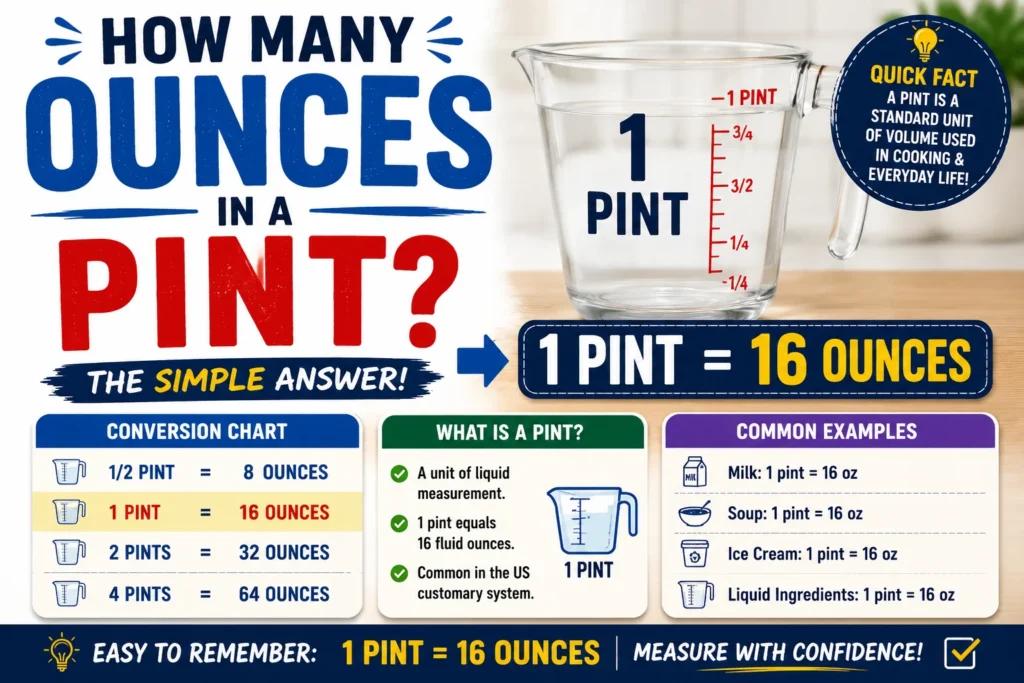
Whether you’re following a recipe, pouring beverages, brewing beer, or converting kitchen measurements, one of…