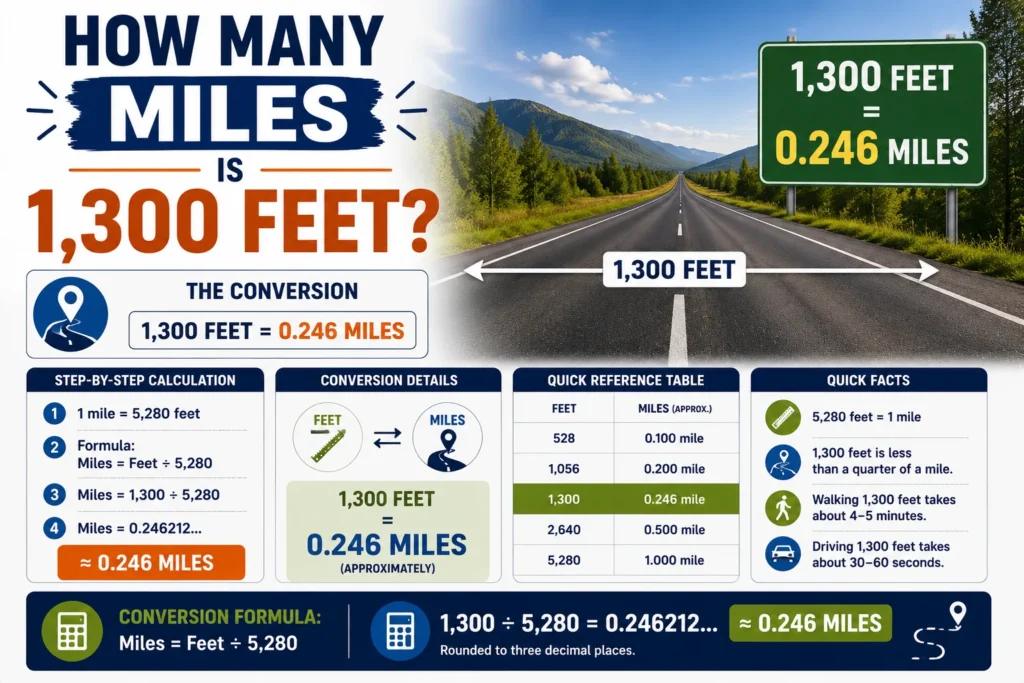
How Many Miles Is 1,300 Feet? Exact Conversion Guide
If you’re converting a distance for a construction project, walking route, property measurement, school assignment,…
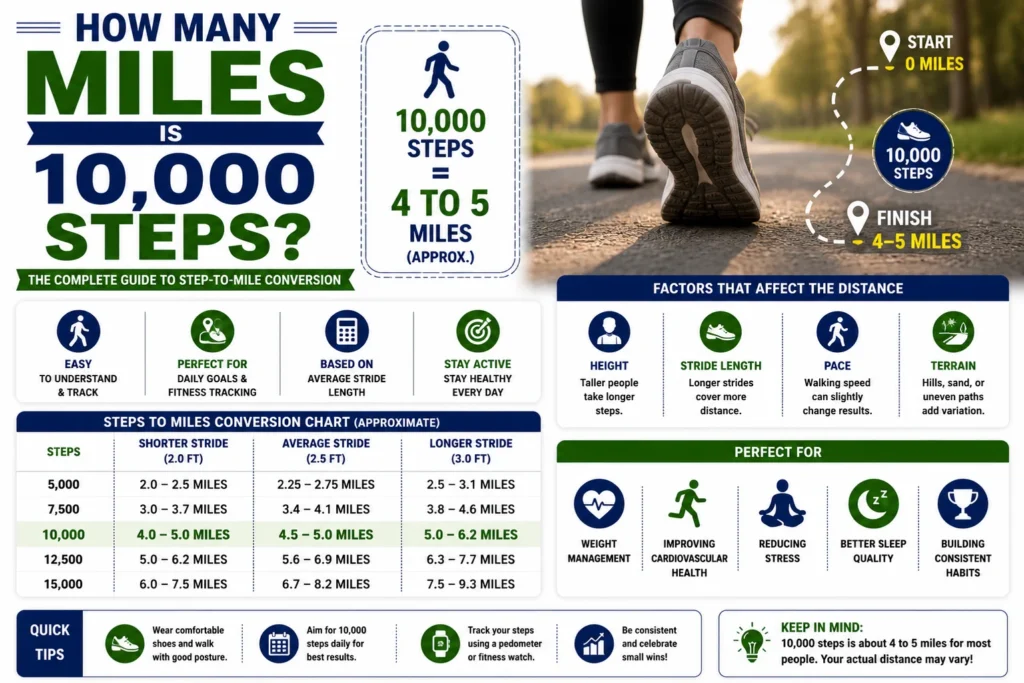
The goal of walking 10,000 steps a day has become one of the most popular fitness targets worldwide. But how far do you actually walk when you reach that milestone?
The answer depends on your stride length, which varies based on your height, walking style, and gender.
For most adults:
The average person walks about 4.5 to 5 miles when taking 10,000 steps.
In this guide, you’ll learn how stride length affects distance, see estimates for men and women, explore conversion charts, and discover how long it takes to walk 10,000 steps.
| Person | Approximate Distance |
|---|---|
| Average adult | 4.5–5 miles |
| Average woman | 4.2–4.8 miles |
| Average man | 4.8–5.2 miles |
| Long stride | Up to 5.5 miles |
| Short stride | Around 4 miles |
These are estimates. Your actual distance depends on your stride length.
Every person has a unique stride.
A stride length is the distance covered in one step.
People with:
Because of these differences, two people taking the same number of steps may cover different distances.
Typical stride lengths are:
| Person | Average Stride |
| Woman | 2.1–2.3 feet |
| Man | 2.4–2.6 feet |
| Average adult | About 2.4 feet |
These averages are used in most fitness calculators.
You can estimate your walking distance with this formula:
Miles = Steps × Stride Length (feet) ÷ 5,280
Where:
If your stride is 2.5 feet:
10,000 × 2.5 = 25,000 feet
25,000 ÷ 5,280 ≈ 4.7 miles
Most adults walk approximately:
This estimate works well for general fitness tracking and daily activity goals.
Women generally have slightly shorter strides.
Average distance:
This range varies depending on height and walking speed.
Men usually have longer strides.
Average distance:
Tall individuals may cover even more than 5 miles.
| Steps | Approximate Miles |
| 1,000 | 0.45–0.5 |
| 2,000 | 0.9–1 |
| 5,000 | 2.2–2.5 |
| 7,500 | 3.4–3.8 |
| 10,000 | 4–5 |
| 12,500 | 5.5–6 |
| 15,000 | 6–7.5 |
| 20,000 | 8–10 |
| Miles | Approximate Steps |
| 1 | 2,000–2,500 |
| 2 | 4,000–5,000 |
| 3 | 6,000–7,500 |
| 4 | 8,000–10,000 |
| 5 | 10,000–12,500 |
These estimates assume an average walking stride.
Walking speed affects how long it takes.
| Walking Speed | Time |
| Slow | 2–2.5 hours |
| Moderate | 1.5–2 hours |
| Brisk | 1.25–1.5 hours |
Many people reach 10,000 steps gradually throughout the day rather than in one walk.
Calories burned depend on:
Average estimates:
| Weight | Calories Burned |
| 125 lb | 250–300 |
| 155 lb | 300–400 |
| 185 lb | 400–500 |
Walking uphill or carrying weight increases calorie burn.
The 10,000-step goal became popular through a Japanese pedometer marketing campaign in the 1960s. Modern research suggests that health benefits begin well below 10,000 steps, and more steps generally provide greater benefits up to a point.
Benefits of regular walking include:
The best daily step goal is one you can maintain consistently.
Small changes throughout the day can add up quickly.
Your 10,000-step distance may change because of:
Using your own measured stride length provides the most accurate estimate.
For most adults, 10,000 steps equals approximately 4 to 5 miles.
Not always. It depends on your stride length. Many people walk closer to 4.5–4.8 miles.
Approximately 6.4 to 8 kilometers.
Most people need 1.5 to 2 hours at a moderate pace.
Typically 250–500 calories, depending on body weight and walking intensity.
Yes. Your total daily step count matters more than completing it in one session.
Yes. Longer legs usually mean a longer stride, resulting in more distance covered.
Personal measurements are always the most accurate.
For most people, 10,000 steps equals about 4 to 5 miles, but your exact distance depends on your stride length, height, and walking style. While the famous 10,000-step goal is a helpful benchmark, consistency matters more than hitting an exact number every day.
Whether your goal is improving fitness, managing weight, or simply staying active, tracking your daily steps is an easy and effective way to support a healthier lifestyle.
If you’re converting a distance for a construction project, walking route, property measurement, school assignment,…
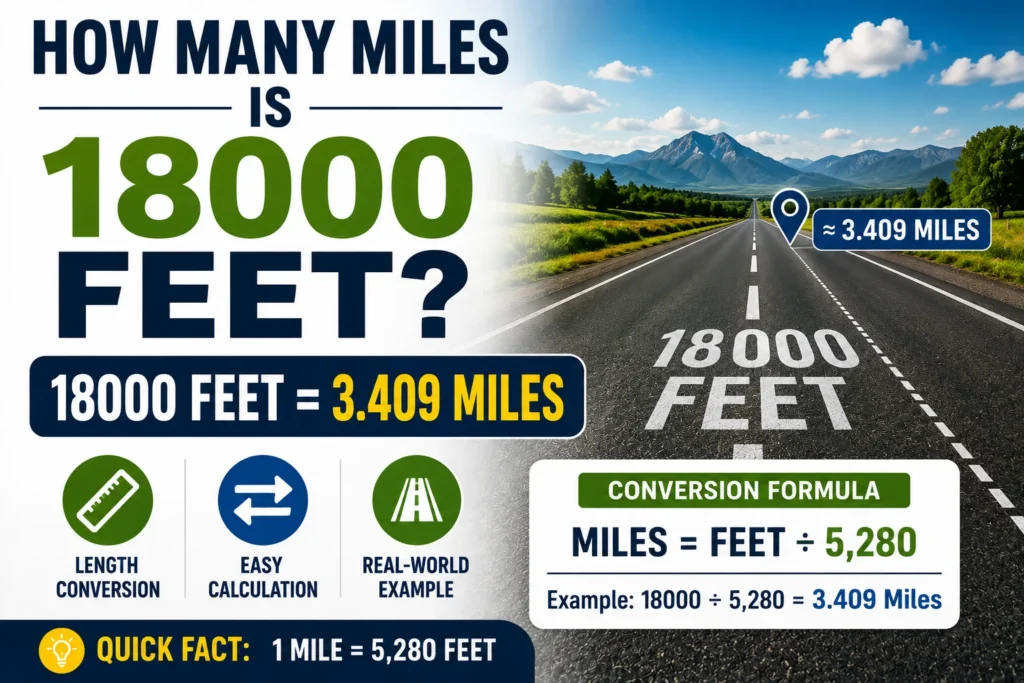
If you’re working with distance measurements, you may wonder how many miles is 18,000 feet.…
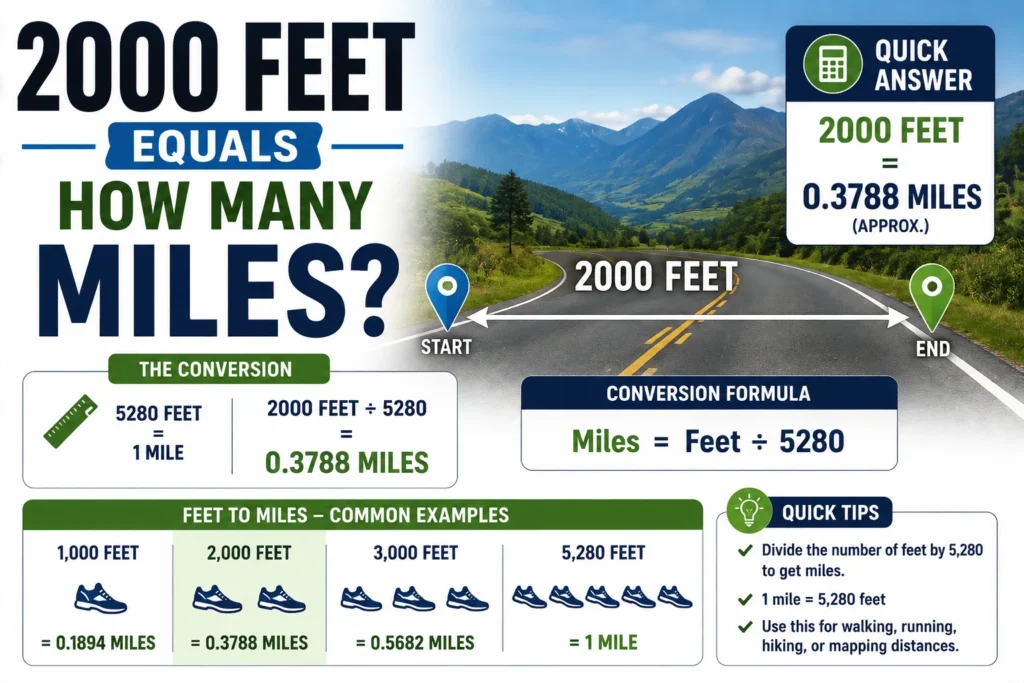
If you’re trying to convert a distance from feet to miles, you may be wondering,…