

If you’re planning a new lawn, replacing damaged grass, or tackling a landscaping project, one of the first questions you’ll probably ask is, “How many sq feet of sod on a pallet?”
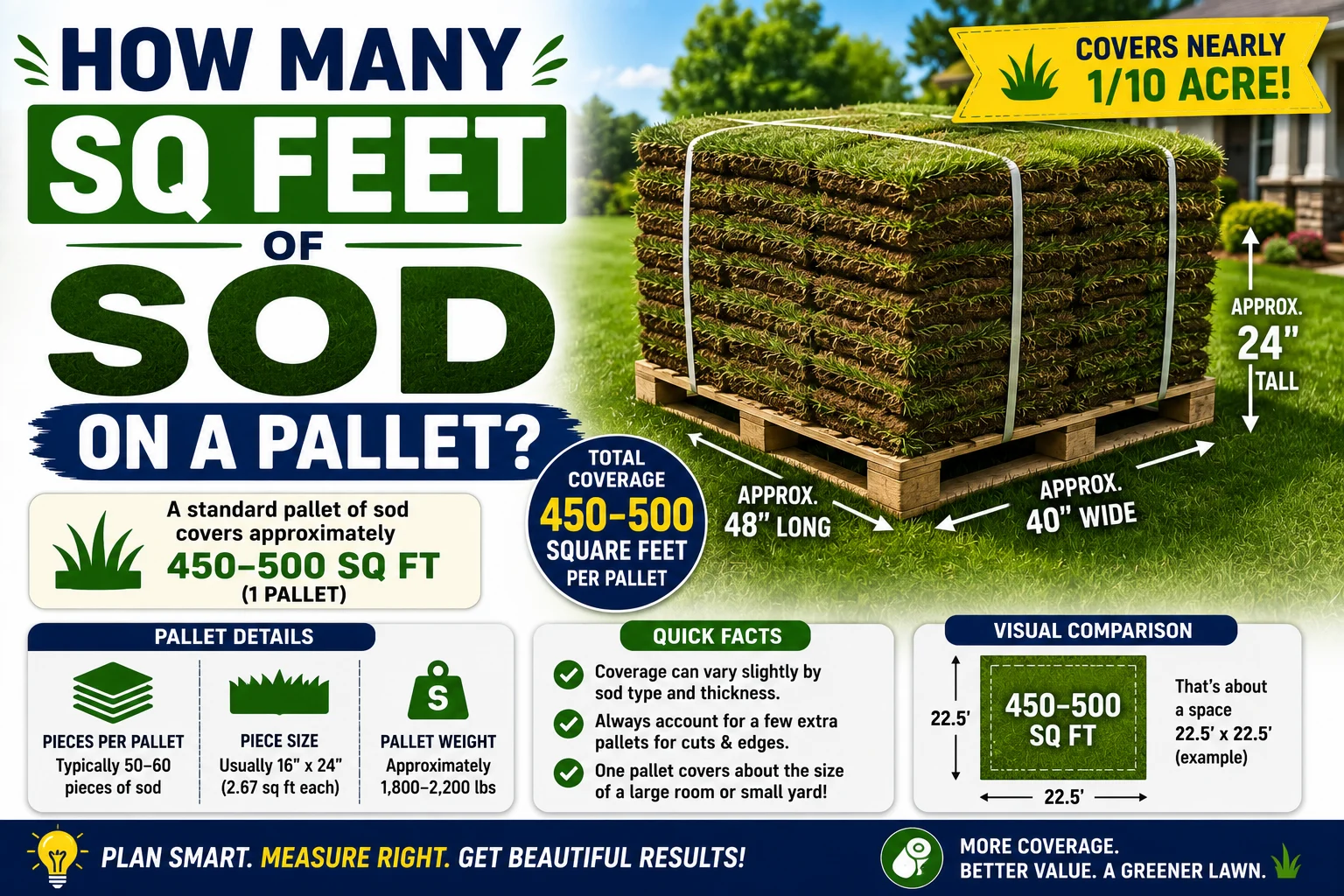
Knowing the coverage of a sod pallet helps you estimate costs, reduce waste, and order the right amount of grass. While there’s no single universal pallet size, most pallets of sod cover between 400 and 500 square feet, depending on the supplier, grass variety, and the size of each sod piece.
Whether you’re installing Bermuda, Kentucky Bluegrass, St. Augustine, or Zoysia sod, understanding pallet coverage makes your project much easier.
In this guide, you’ll learn standard pallet sizes, coverage charts, calculation formulas, practical examples, and expert tips for buying sod.
Quick Answer
A standard pallet of sod typically covers 400–500 square feet.
Most suppliers sell pallets that cover:
| Sod Package | Average Coverage |
|---|---|
| Half Pallet | 200–250 sq ft |
| Full Pallet | 400–500 sq ft |
The most common industry standard is:
1 pallet = approximately 450 square feet
Always confirm coverage with your local sod supplier, as pallet sizes can vary.
Standard Sod Pallet Coverage
Most sod farms package grass in slabs or rolls that are stacked onto wooden pallets for delivery.
Although sizes differ slightly by region, common pallet coverage includes:
| Pallet Size | Coverage |
|---|---|
| Small pallet | 400 sq ft |
| Standard pallet | 450 sq ft |
| Large pallet | 500 sq ft |
Many homeowners use 450 square feet per pallet when estimating materials.
Why Does Sod Pallet Coverage Vary?
Not every pallet contains the same amount of sod.
Coverage depends on several factors.
Grass Type
Different grass varieties are harvested and packaged differently.
Examples include:
- Bermuda
- Zoysia
- St. Augustine
- Tall Fescue
- Kentucky Bluegrass
Supplier Standards
Each sod farm determines how many pieces fit safely on a pallet.
Sod Piece Size
Some suppliers use:
- 16″ × 24″ slabs
- 18″ × 24″ slabs
- Large rolls
- Mini rolls
Larger pieces mean fewer sections but similar total coverage.
Moisture Content
Freshly harvested sod is heavy, so pallet size may be adjusted to meet shipping weight limits.
How to Calculate the Number of Pallets You Need
Start by measuring your lawn.
Step 1: Measure Length and Width
Example:
Length = 40 feet
Width = 30 feet
Area:
40 × 30 = 1,200 square feet
Step 2: Divide by Pallet Coverage
Assuming one pallet covers 450 square feet:
1,200 ÷ 450 = 2.67 pallets
Round up.
You’ll need 3 pallets.
Sod Coverage Chart
Here’s a quick reference.
| Lawn Size | Approximate Pallets Needed* |
|---|---|
| 400 sq ft | 1 pallet |
| 450 sq ft | 1 pallet |
| 500 sq ft | 1–2 pallets |
| 900 sq ft | 2 pallets |
| 1,200 sq ft | 3 pallets |
| 1,800 sq ft | 4 pallets |
| 2,250 sq ft | 5 pallets |
| 4,500 sq ft | 10 pallets |
*Based on an average coverage of 450 sq ft per pallet.
Common Grass Types and Typical Coverage
| Grass Type | Typical Coverage per Pallet |
|---|---|
| Bermuda | 400–500 sq ft |
| St. Augustine | 400–450 sq ft |
| Zoysia | 400–500 sq ft |
| Tall Fescue | 450–500 sq ft |
| Kentucky Bluegrass | 450–500 sq ft |
Always verify the exact coverage with your sod supplier.
Real-World Examples
Example 1: Small Front Yard
Lawn size:
450 square feet
You’ll need:
1 pallet
Example 2: Medium Backyard
Area:
900 square feet
Calculation:
900 ÷ 450 = 2 pallets
Example 3: Large Lawn
Area:
2,100 square feet
Calculation:
2,100 ÷ 450 = 4.67 pallets
Round up:
5 pallets
How Many Pieces of Sod Are on a Pallet?
The number of pieces depends on the size of each slab.
Typical ranges include:
- 150–170 small slabs
- 60–80 large slabs
- Several large rolls (for commercial installations)
Even if the number of pieces varies, the total coverage is generally between 400 and 500 square feet.
Common Mistakes When Ordering Sod
Measuring Incorrectly
Always measure every section of your lawn separately, especially if it’s irregularly shaped.
Not Ordering Extra
Most landscapers recommend ordering 5–10% extra to account for:
- Trimming
- Curves
- Waste
- Mistakes
- Future repairs
Ignoring Supplier Differences
One supplier’s pallet may cover 400 sq ft, while another covers 500 sq ft.
Waiting Too Long to Install
Fresh sod should usually be installed within 24 hours of delivery to prevent drying out.
Expert Tips Before Buying Sod
Prepare the Soil
Remove weeds and loosen the soil before installation.
Water Immediately
Water sod thoroughly after installation to help the roots establish.
Measure Carefully
Accurate measurements reduce waste and unnecessary expense.
Ask About Delivery
Sod is heavy. A full pallet can weigh 2,000–3,000 pounds, depending on moisture and grass type.
Buy a Little Extra
Ordering an additional 5–10% helps with trimming and future patching.
Why Knowing Pallet Coverage Matters
Understanding pallet coverage helps you:
- Estimate project costs
- Reduce waste
- Plan deliveries
- Schedule installation
- Compare supplier prices
- Avoid ordering too much or too little sod
A little planning can save both time and money.
FAQs
1. How many sq feet of sod on a pallet?
Most pallets of sod cover 400–500 square feet, with 450 square feet being the most common average.
2. How much does a pallet of sod weigh?
A full pallet typically weighs 2,000–3,000 pounds, depending on the grass type and moisture content.
3. How many pallets do I need for a 1,000-square-foot lawn?
Using the average of 450 square feet per pallet, you’ll need about 3 pallets (rounding up).
4. Does every sod supplier use the same pallet size?
No. Coverage varies by supplier, grass variety, and sod piece dimensions. Always verify the coverage before ordering.
5. Should I order extra sod?
Yes. Ordering 5–10% more than your calculated area helps cover trimming, irregular edges, and future repairs.
Conclusion
If you’re wondering how many sq feet of sod on a pallet, the answer is that most full pallets cover between 400 and 500 square feet, with 450 square feet being the most common estimate. The exact coverage depends on the grass variety, supplier, and the size of each sod piece.
Before placing your order, measure your lawn accurately, confirm the pallet coverage with your supplier, and add an extra 5–10% for trimming and waste. This ensures you have enough sod to complete your project without unnecessary delays or additional delivery costs.