

If you’re shopping for a space heater, garage heater, propane heater, or electric heating unit, you may be asking, “How many square feet will a 10,000 BTU heat?” Choosing the right heater size is essential for staying comfortable while keeping energy costs under control.
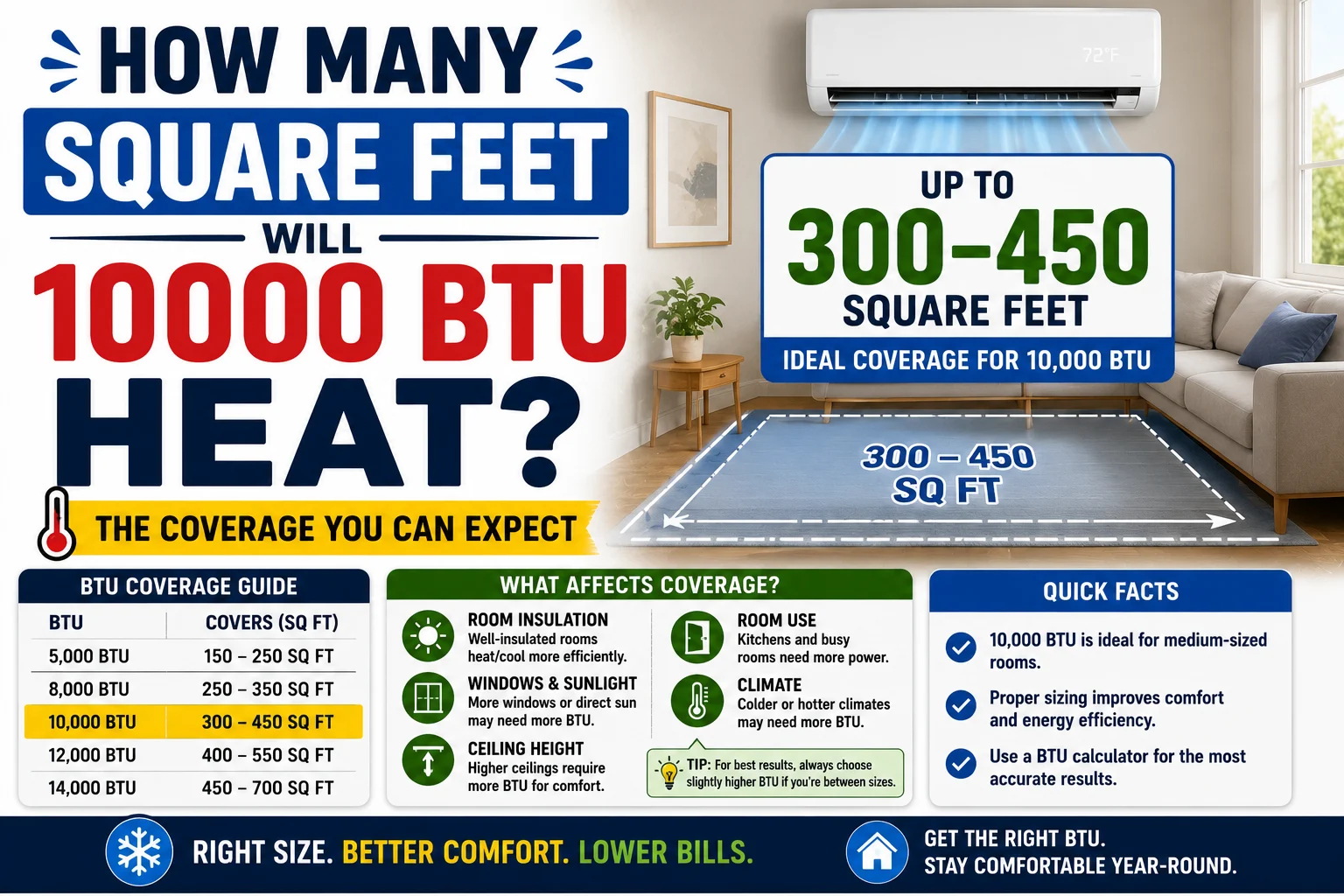
In general, a 10,000 BTU heater can effectively heat approximately 300 to 450 square feet under average conditions. However, the actual coverage depends on several factors, including insulation, ceiling height, outdoor temperatures, windows, and whether the space is enclosed or drafty.
A heater that’s too small may run continuously without warming the room, while one that’s too large can waste energy and make the space uncomfortably warm.
This guide explains how much area a 10,000 BTU heater can cover, what affects its performance, and how to determine the right heating capacity for your space.
Quick Answer
For most homes:
| Heater Size | Estimated Coverage |
|---|---|
| 10,000 BTU | 300–450 sq ft |
Typical Recommendations
- 300 sq ft – Poor insulation or very cold climates
- 350 sq ft – Average home conditions
- 400–450 sq ft – Well-insulated rooms in mild climates
A 10,000 BTU heater is commonly used for bedrooms, home offices, small living rooms, workshops, garages, and cabins.
What Is a BTU?
BTU stands for British Thermal Unit.
It measures the amount of heat required to raise the temperature of one pound of water by one degree Fahrenheit. In home heating, the BTU rating tells you how much heat a heater can produce each hour.
Generally:
- Higher BTUs = More heating power
- Lower BTUs = Smaller heating capacity
How Much Space Can a 10,000 BTU Heater Heat?
A 10,000 BTU heater is suitable for small to medium-sized rooms.
Typical coverage includes:
| Room Type | Approximate Size |
|---|---|
| Bedroom | 200–300 sq ft |
| Home Office | 150–300 sq ft |
| Living Room | 300–400 sq ft |
| Garage | 300–450 sq ft |
| Cabin | 250–400 sq ft |
| Basement Room | 300–400 sq ft |
These estimates assume:
- 8-foot ceilings
- Average insulation
- Moderate winter temperatures
- Minimal air leaks
BTU Heating Chart
Use this chart as a general guide when sizing a heater.
| Room Size | Recommended BTUs |
|---|---|
| 100 sq ft | 3,000–4,000 BTUs |
| 200 sq ft | 6,000 BTUs |
| 300 sq ft | 8,000–10,000 BTUs |
| 400 sq ft | 10,000–12,000 BTUs |
| 500 sq ft | 12,000–15,000 BTUs |
| 600 sq ft | 15,000–18,000 BTUs |
| 800 sq ft | 20,000–24,000 BTUs |
| 1,000 sq ft | 25,000–30,000 BTUs |
Factors That Affect Heating Coverage
A 10,000 BTU heater may heat more or less space depending on the following:
Insulation
Well-insulated homes retain heat longer and require fewer BTUs.
Poor insulation allows warm air to escape, reducing heating efficiency.
Climate
Homes in colder regions require more heating capacity than homes in milder climates.
Ceiling Height
Standard BTU estimates assume 8-foot ceilings.
If your ceilings are 10–12 feet high, you’ll need additional heating capacity.
Windows and Doors
Large windows and drafty doors increase heat loss.
Double-pane windows improve energy efficiency.
Room Layout
An open floor plan is harder to heat than a small enclosed room because warm air spreads over a larger area.
Sunlight
Rooms that receive plenty of sunlight during the day often require less supplemental heating.
Types of 10,000 BTU Heaters
Several types of heaters are available with a 10,000 BTU output.
Propane Heaters
Ideal for:
- Garages
- Workshops
- Cabins
- Outdoor covered spaces
Pros
- Powerful heat
- Portable
- No electricity required (for many models)
Cons
- Requires propane
- Proper ventilation may be needed
Electric Heaters
Best for:
- Bedrooms
- Offices
- Apartments
Pros
- Easy to use
- No fuel storage
- Quiet operation
Cons
- Higher electricity costs in some areas
- Limited by electrical circuit capacity
Wall Heaters
Suitable for:
- Small homes
- Basements
- Bathrooms
- Sunrooms
They save floor space while providing consistent heat.
How to Estimate Your Heating Needs
A simple guideline is:
20–30 BTUs per square foot
Example:
Room size:
400 sq ft
Calculation:
400 × 25 = 10,000 BTUs
This rule works well for average residential spaces but may need adjustments for insulation, ceiling height, and climate.
Real-World Examples
Example 1: Bedroom
Room size:
250 sq ft
A 10,000 BTU heater provides more than enough heating capacity.
Example 2: Home Office
Office size:
350 sq ft
A 10,000 BTU heater is an excellent fit.
Example 3: Garage
Garage size:
450 sq ft
A 10,000 BTU propane heater may be sufficient if the garage is insulated.
Example 4: Cabin
Cabin size:
420 sq ft
A well-insulated cabin can often be heated comfortably with a 10,000 BTU unit.
Common Heater Sizing Mistakes
Buying a Heater That’s Too Small
An undersized heater may run continuously without maintaining the desired temperature.
Oversizing the Heater
A heater that’s too powerful can waste energy and create uneven heating.
Ignoring Insulation
Poor insulation significantly increases heating requirements.
Forgetting Ceiling Height
Rooms with vaulted ceilings need more BTUs than rooms with standard ceilings.
Heating Open Spaces
Large open areas often require multiple heat sources or a larger heating system.
Expert Tips
- Measure your room accurately before buying.
- Improve insulation to reduce heating costs.
- Seal air leaks around doors and windows.
- Close unused rooms to concentrate heat.
- Choose an ENERGY STAR® heater when available.
- Use a programmable thermostat for better efficiency.
Why Choosing the Right Heater Matters
Proper heater sizing helps you:
- Stay comfortable
- Lower energy bills
- Reduce equipment wear
- Heat rooms more evenly
- Improve energy efficiency
Buying the right-sized heater saves money over time.
FAQs
1. How many square feet will a 10,000 BTU heater heat?
Most 10,000 BTU heaters can heat approximately 300–450 square feet, depending on insulation, climate, and ceiling height.
2. Is a 10,000 BTU heater enough for a garage?
Yes, for many insulated garages up to 400–450 square feet. Larger or poorly insulated garages may require more heating capacity.
3. Can a 10,000 BTU heater heat an entire house?
No. A 10,000 BTU heater is intended for individual rooms or small spaces, not an entire home.
4. Does insulation affect BTU requirements?
Yes. Better insulation reduces heat loss, allowing a 10,000 BTU heater to warm a larger area more efficiently.
5. Is 10,000 BTUs enough for a 500-square-foot room?
In most cases, 10,000 BTUs is on the lower end for 500 square feet. A 12,000–15,000 BTU heater is generally a better choice, especially in colder climates or less-insulated spaces.
Conclusion
If you’re wondering how many square feet will 10,000 BTU heat, the general answer is 300 to 450 square feet, depending on insulation, climate, ceiling height, and room layout. A 10,000 BTU heater is an excellent choice for bedrooms, home offices, small living rooms, garages, and cabins when properly matched to the space.
Before purchasing a heater, measure your room carefully and consider factors such as insulation and local weather conditions. Choosing the correct BTU rating will provide better comfort, improve energy efficiency, and help keep heating costs under control.