
How Many Feet Are in 1 Story? Average Building Height
If you’re wondering how many feet are in 1 story, there isn’t one exact number…
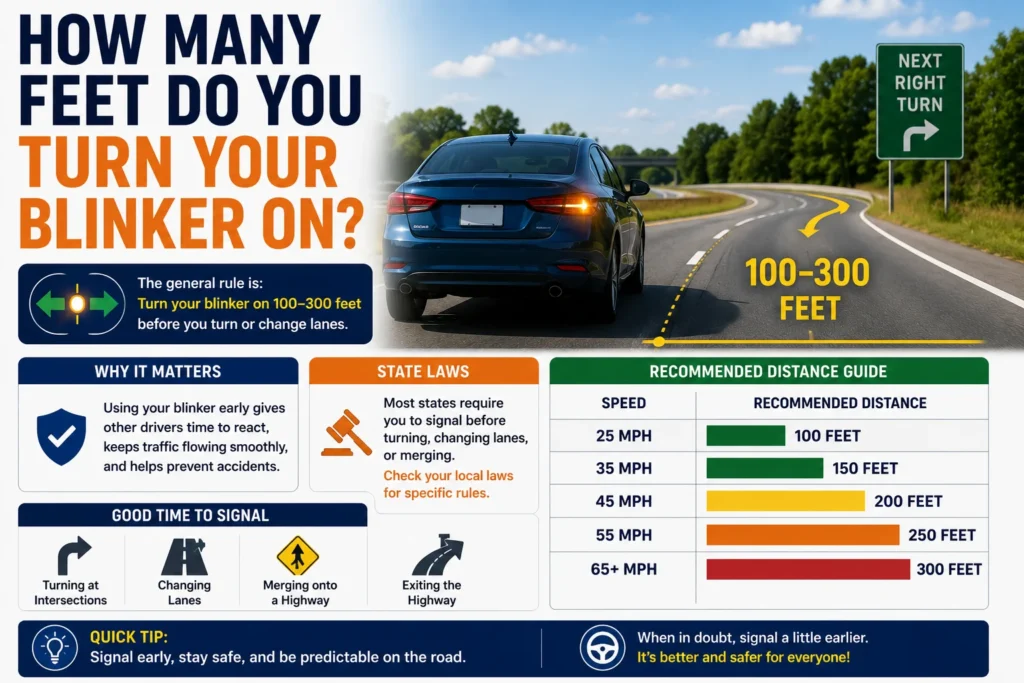
If you’re learning to drive or preparing for a road test, you may wonder: How many feet before turning should you turn your blinker on?
In most U.S. states, drivers are required to activate their turn signal at least 100 feet before making a turn.
Using your blinker early gives other drivers, cyclists, and pedestrians enough time to react safely. It is one of the most important habits for preventing accidents and passing a driving test.
In this guide, you’ll learn the standard blinker rule, why it matters, and how signaling laws may vary.
The general rule is:
Turn on your blinker at least 100 feet before turning.
This applies to:
Most driver’s manuals and road tests follow this rule.
Drivers should signal early enough to warn others about their intentions.
The standard requirement is:
Signal continuously during the final 100 feet before the turn.
To visualize 100 feet, imagine:
Signaling too late can confuse other drivers and increase the risk of collisions.
Your turn signal helps:
Failing to signal is a common cause of traffic citations and crashes.
You should use your blinker when:
Good drivers signal even when roads appear empty.
Many new drivers struggle to estimate 100 feet.
One hundred feet is approximately equal to:
Practicing these distances can help during a driving test.
Most U.S. states require signaling at least 100 feet before a turn, but laws can vary.
Some states may have:
Always check your local driver’s handbook.
Failing to use your blinker can result in:
Many driving examiners consider improper signaling a serious mistake.
Although lane-change laws vary, the safest approach is to:
Experts recommend signaling several seconds before moving into another lane.
Avoid these common errors:
Consistent signaling improves safety for everyone.
If you’re taking a road test:
These habits can help you pass your exam on the first attempt.
In most states, you should activate your turn signal at least 100 feet before turning.
Most U.S. states follow the 100-foot rule, although some local laws may differ.
One hundred feet is roughly equal to six or seven car lengths.
Yes. Always signal before changing lanes.
Yes. Improper signaling is a common reason people fail road tests.
Early signaling gives other drivers, cyclists, and pedestrians enough time to react safely.
Although laws vary, signaling is generally considered good driving practice.
The general rule is to turn on your blinker at least 100 feet before making a turn. Using your signal properly helps prevent accidents, keeps traffic moving smoothly, and demonstrates safe driving habits.
Whether you’re preparing for your driver’s test or simply refreshing your knowledge, remembering the 100-foot rule can make you a safer and more confident driver.
If you’re wondering how many feet are in 1 story, there isn’t one exact number…
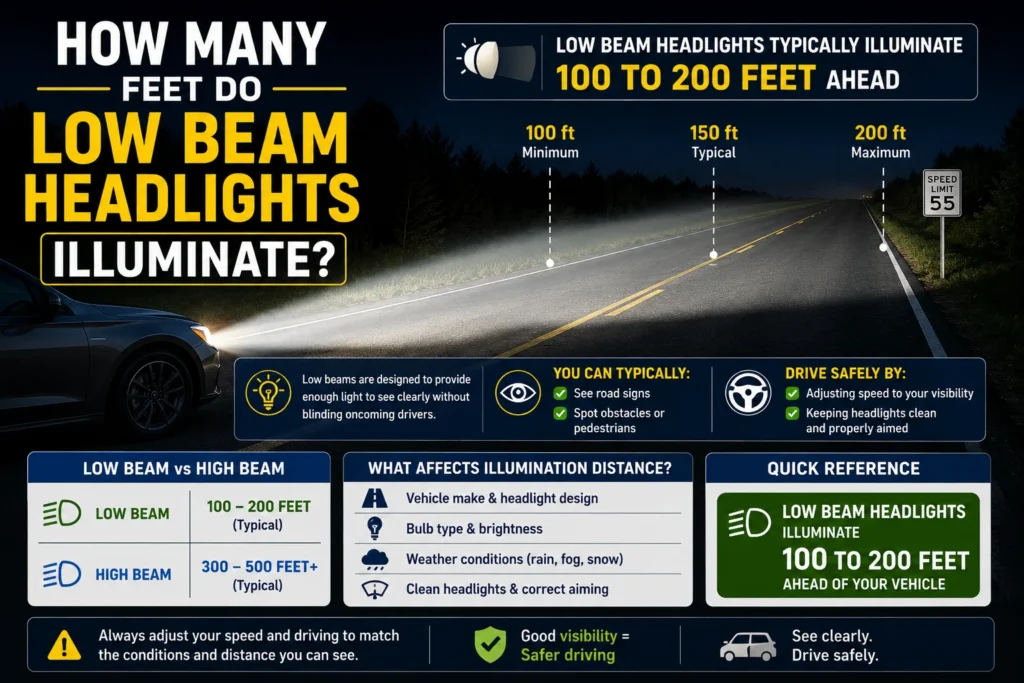
If you’ve ever wondered how many feet do low beam headlights illuminate, the answer depends…

If you’re planning to build a house, one of the most important material questions is…