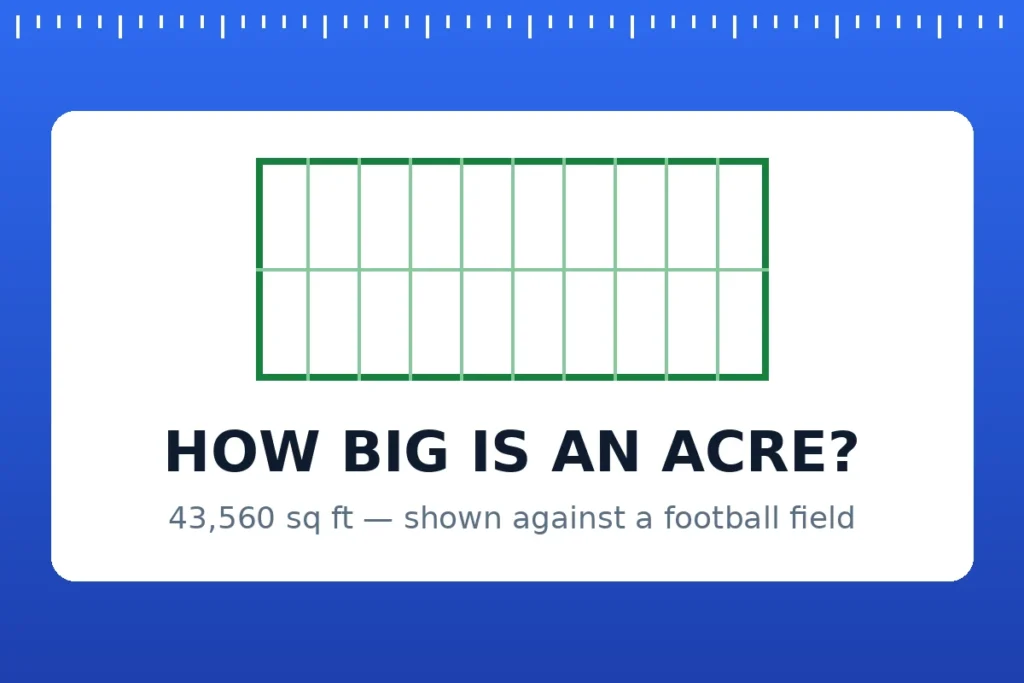
How Big Is an Acre? Visual Guide with Comparisons
Every property listing uses the same phrase: “set on a one-acre lot.” It sounds generous…

If you’re pouring a patio, repairing a sidewalk, or installing fence posts, you may wonder: How many square feet will a bag of concrete cover?
The answer depends on two things:
For example, an 80-pound bag of concrete covers about 4 square feet at a thickness of 4 inches.
Smaller bags cover less area, while thinner slabs cover more area.
In this guide, you’ll learn how to calculate concrete coverage and see charts for the most common bag sizes.
Here is the approximate coverage at 4 inches thick:
| Bag Size | Coverage |
|---|---|
| 40-pound bag | 2 square feet |
| 50-pound bag | 2.5 square feet |
| 60-pound bag | 3 square feet |
| 80-pound bag | 4 square feet |
These numbers are estimates and may vary slightly by manufacturer.
Concrete coverage depends on:
A thicker slab uses more concrete, which means the bag covers fewer square feet.
To estimate coverage, use the following formula:
You must first convert the slab thickness from inches to feet.
For example:
Then divide the bag’s volume by the thickness.
| Bag Size | Coverage |
| 40-pound bag | 4 sq ft |
| 50-pound bag | 5 sq ft |
| 60-pound bag | 6 sq ft |
| 80-pound bag | 8 sq ft |
| Bag Size | Coverage |
| 40-pound bag | 2.7 sq ft |
| 50-pound bag | 3.3 sq ft |
| 60-pound bag | 4 sq ft |
| 80-pound bag | 5.3 sq ft |
| Bag Size | Coverage |
| 40-pound bag | 2 sq ft |
| 50-pound bag | 2.5 sq ft |
| 60-pound bag | 3 sq ft |
| 80-pound bag | 4 sq ft |
| Bag Size | Coverage |
| 40-pound bag | 1.3 sq ft |
| 50-pound bag | 1.7 sq ft |
| 60-pound bag | 2 sq ft |
| 80-pound bag | 2.7 sq ft |
The volume of concrete varies by bag size.
| Bag Size | Approximate Volume |
| 40-pound bag | 0.30 cubic feet |
| 50-pound bag | 0.37 cubic feet |
| 60-pound bag | 0.45 cubic feet |
| 80-pound bag | 0.60 cubic feet |
Manufacturers may list slightly different yields.
Different projects require different slab depths.
| Project | Recommended Thickness |
| Sidewalk | 4 inches |
| Patio | 4 inches |
| Shed base | 4–5 inches |
| Driveway | 5–6 inches |
| Garage floor | 6 inches |
Always follow local building codes and manufacturer instructions.
At 4 inches thick:
At 4 inches thick:
At 4 inches thick:
Large projects are often more economical with ready-mix concrete.
Yes. Most contractors recommend buying:
Extra material helps account for:
Running out of concrete during a pour can create problems.
| Type | Best For |
| Bagged concrete | Small projects |
| Ready-mix concrete | Large projects |
Bagged concrete works well for:
Ready-mix is usually better for driveways and foundations.
An 80-pound bag covers approximately 4 square feet at 4 inches thick.
A 60-pound bag covers approximately 3 square feet at 4 inches thick.
Yes. Thicker slabs reduce the area covered by each bag.
At 4 inches thick, you’ll need about 25 bags of 80-pound concrete.
Bagged concrete is often cheaper for small projects, while ready-mix is more cost-effective for larger jobs.
Yes. Experts recommend purchasing 5–10% extra.
Divide the bag’s concrete volume by the slab thickness.
The number of square feet a bag of concrete covers depends on the bag size and the thickness of the slab. At a standard depth of 4 inches, an 80-pound bag covers about 4 square feet, while smaller bags cover less area.
Knowing these estimates can help you plan your project, budget accurately, and avoid running out of concrete during installation.
Every property listing uses the same phrase: “set on a one-acre lot.” It sounds generous…
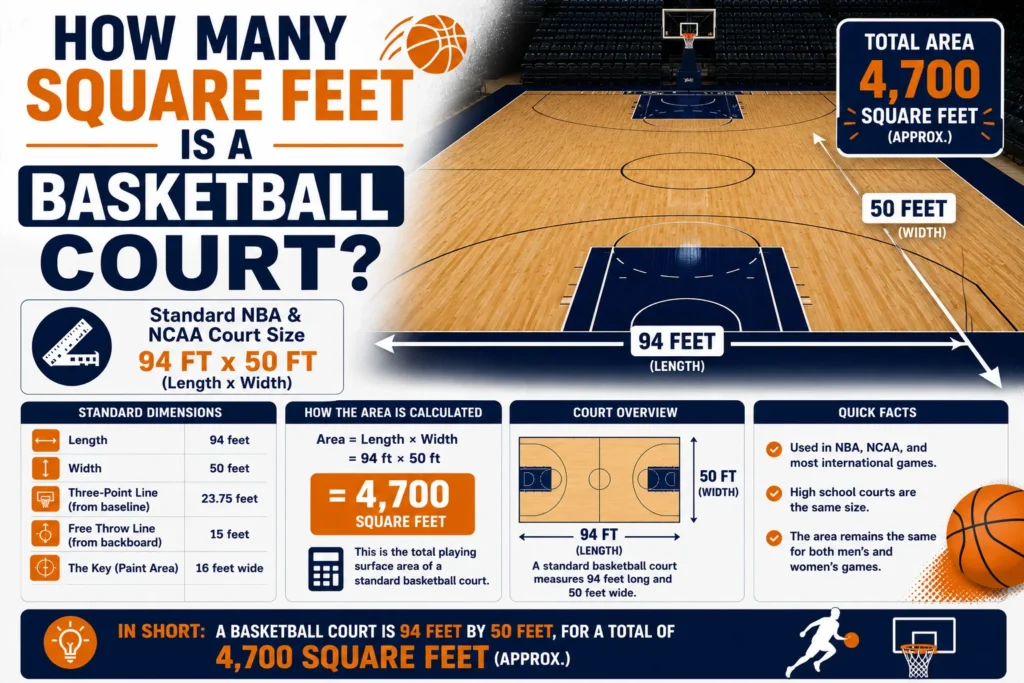
If you’re planning to build a basketball court, comparing gym sizes, estimating flooring requirements, or…
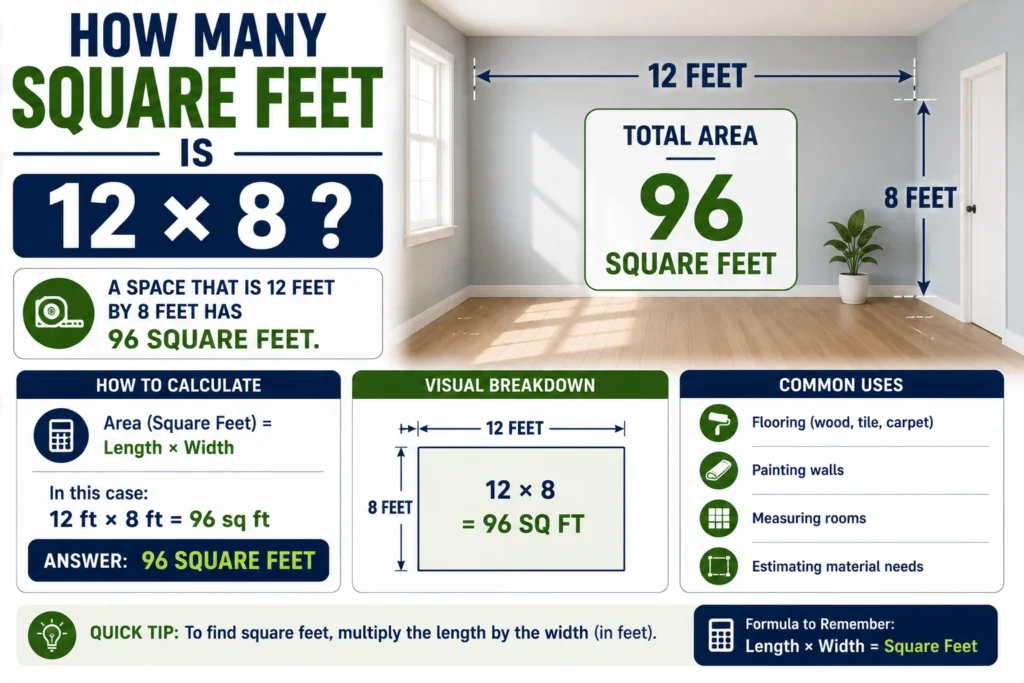
If you’re trying to determine how many square feet is 12 × 8, the calculation…