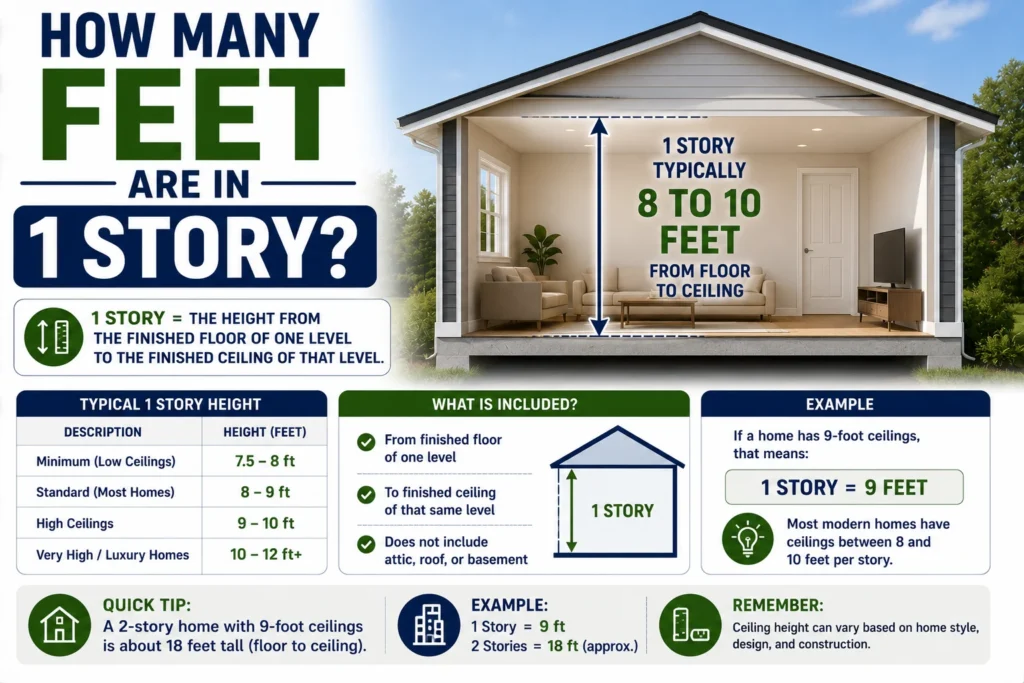
How Many Feet Are in 1 Story? Average Building Height
If you’re wondering how many feet are in 1 story, there isn’t one exact number…

If you’ve ever worked on a home improvement project, measured fabric, played sports, or studied basic mathematics, you’ve probably encountered the question: How many inches are in a yard?
Understanding the relationship between yards and inches is one of the most useful measurement skills in everyday life. Whether you’re calculating the size of a room, buying materials for a DIY project, or helping a child with homework, knowing how to convert yards to inches can save time and prevent costly mistakes.
In this guide, you’ll learn exactly how many inches are in a yard, how to convert between units, practical examples, conversion formulas, and common applications of yard measurements.
The simple answer is:
1 yard = 36 inches
This conversion is part of the Imperial and U.S. customary measurement systems.
Since:
The calculation becomes:
3 × 12 = 36
Therefore:
1 yard equals 36 inches.
This relationship never changes and is the standard conversion used worldwide whenever yards and inches are involved.
A yard is a unit of length commonly used in the United States and a few other countries.
Historically, the yard was based on human body measurements. Today, it is precisely defined as:
The yard is commonly used for measuring:
Because a yard represents a relatively large unit compared to inches, it provides a convenient way to measure longer distances.
The Imperial measurement system was developed over centuries in England.
The relationship between inches, feet, and yards was standardized to make calculations easier:
Multiplying these values gives:
36 inches per yard
This system remains in use today throughout the United States and in various industries worldwide.
Converting yards into inches is straightforward.
Inches = Yards × 36
Simply multiply the number of yards by 36.
2 × 36 = 72
2 yards = 72 inches
5 × 36 = 180
5 yards = 180 inches
10 × 36 = 360
10 yards = 360 inches
This formula works for any yard measurement.
Sometimes you need to convert inches back into yards.
Yards = Inches ÷ 36
72 ÷ 36 = 2
72 inches = 2 yards
180 ÷ 36 = 5
180 inches = 5 yards
360 ÷ 36 = 10
360 inches = 10 yards
This reverse conversion is useful when dealing with larger measurements.
The following table provides quick conversions:
| Yards | Inches |
|---|---|
| 1 | 36 |
| 2 | 72 |
| 3 | 108 |
| 4 | 144 |
| 5 | 180 |
| 6 | 216 |
| 7 | 252 |
| 8 | 288 |
| 9 | 324 |
| 10 | 360 |
| 20 | 720 |
| 50 | 1,800 |
| 100 | 3,600 |
Keeping a chart like this handy can simplify many measurement tasks.
Understanding the actual size of a yard becomes easier when compared with familiar objects.
Many standard acoustic guitars are close to one yard long.
Several baseball bats measure approximately one yard in length.
Three standard 12-inch rulers placed end-to-end equal one yard.
Many residential doorways are around one yard wide.
These comparisons can help you estimate yard measurements without a measuring tape.
Fabric stores frequently sell materials by the yard.
Examples include:
Understanding yard-to-inch conversions helps determine how much material is needed for a project.
Landscapers often use yards when measuring:
Several sports rely heavily on yard measurements.
Examples include:
Contractors frequently measure:
Converting between yards and inches ensures greater precision.
Most measuring tapes display both inches and feet.
To find one yard:
A yardstick is specifically designed to measure one yard.
It contains:
Yardsticks are commonly used in schools, workshops, and fabric stores.
A standard ruler measures 12 inches.
Three rulers placed end-to-end equal one yard.
Many people confuse these units.
Here’s a simple comparison:
| Unit | Equivalent |
|---|---|
| 1 Inch | Base unit |
| 1 Foot | 12 Inches |
| 1 Yard | 36 Inches |
| 1 Yard | 3 Feet |
Think of the inch as the smallest commonly used unit, the foot as a medium-sized unit, and the yard as a larger unit.
Accurate measurements reduce errors in projects.
Quick conversions save time during planning and purchasing.
Many professionals use different units depending on the situation.
Understanding both helps avoid confusion.
Incorrect measurements often lead to buying too much or too little material.
Knowing conversions can help prevent unnecessary expenses.
Many people mistakenly assume a yard equals 12 inches because a foot equals 12 inches.
Remember:
Double-check calculations when converting multiple yards.
Avoid confusing:
They are different measurement systems.
Yes. One yard always equals exactly 36 inches.
There are 3 feet in a yard.
Two yards equal 72 inches.
Five yards equal 180 inches.
No. A meter is slightly longer than a yard.
Yards provide a convenient way to measure large pieces of fabric while maintaining accuracy.
The answer to “How many inches are in a yard?” is simple:
1 yard = 36 inches
This essential conversion is widely used in construction, sewing, sports, landscaping, education, and everyday life. By remembering the simple formula:
Inches = Yards × 36
you can quickly convert measurements and handle projects with greater confidence.
Whether you’re measuring fabric, planning a garden, or solving math problems, understanding yard-to-inch conversions is a valuable skill that you’ll use again and again.
If you’re wondering how many feet are in 1 story, there isn’t one exact number…
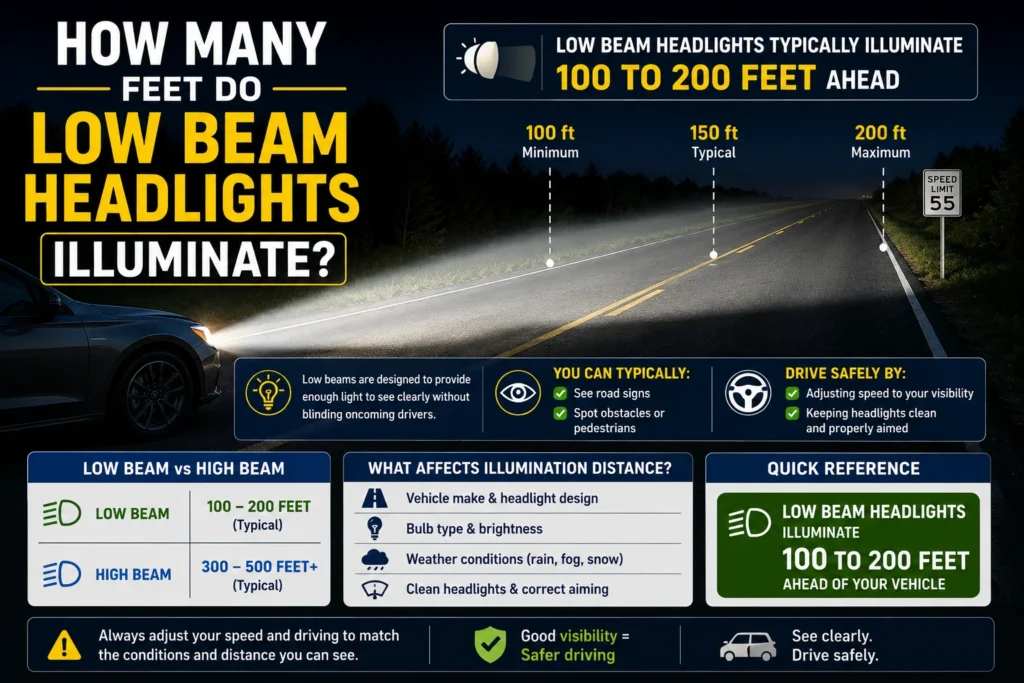
If you’ve ever wondered how many feet do low beam headlights illuminate, the answer depends…
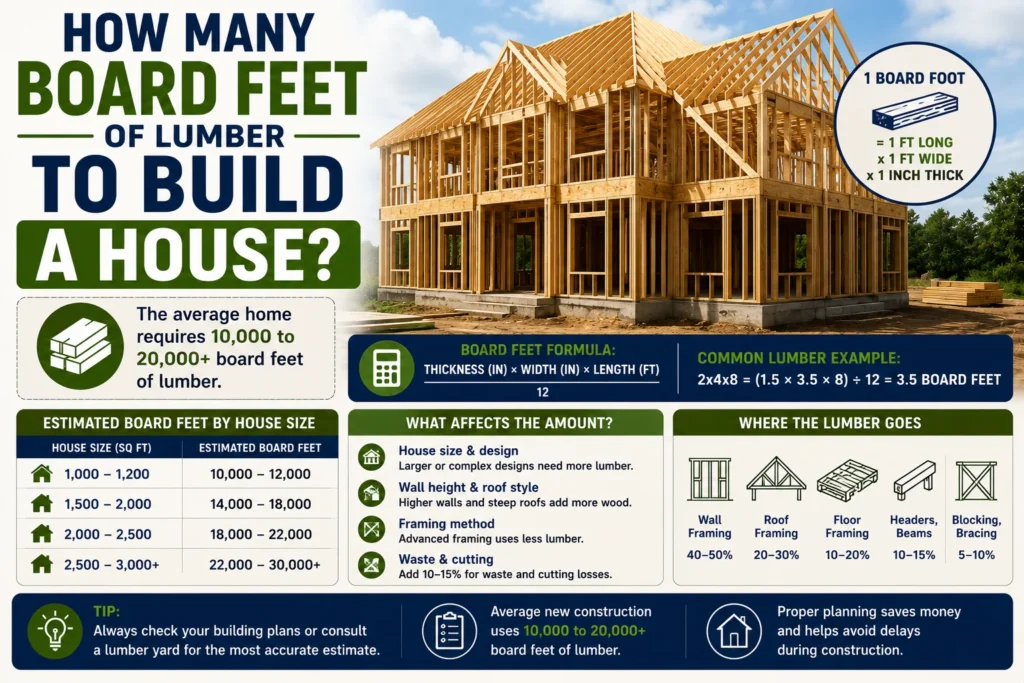
If you’re planning to build a house, one of the most important material questions is…