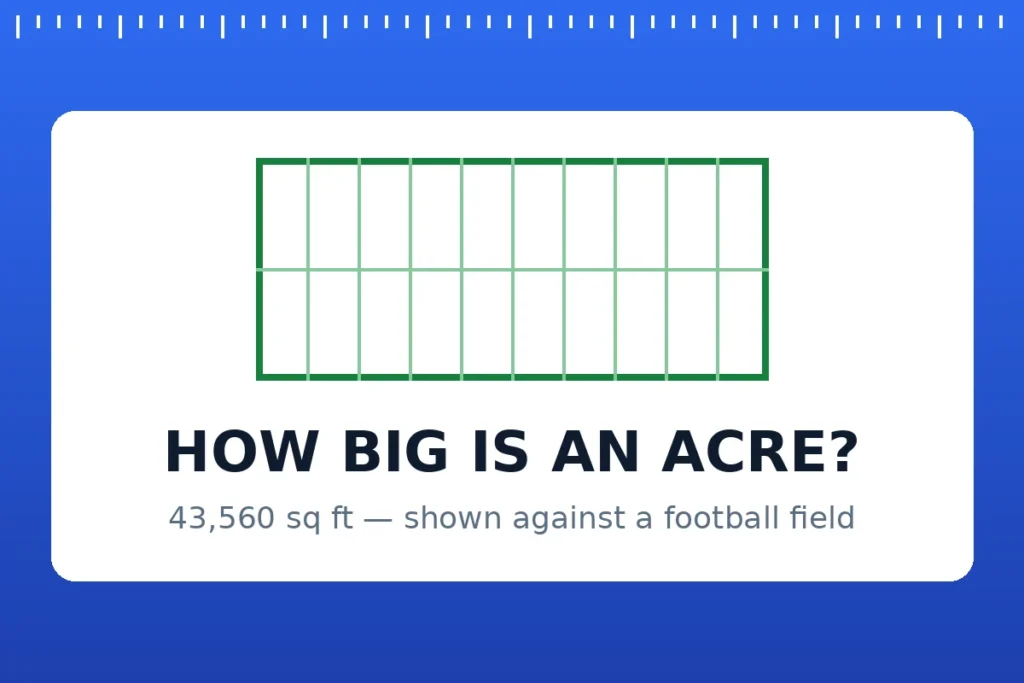
How Big Is an Acre? Visual Guide with Comparisons
Every property listing uses the same phrase: “set on a one-acre lot.” It sounds generous…
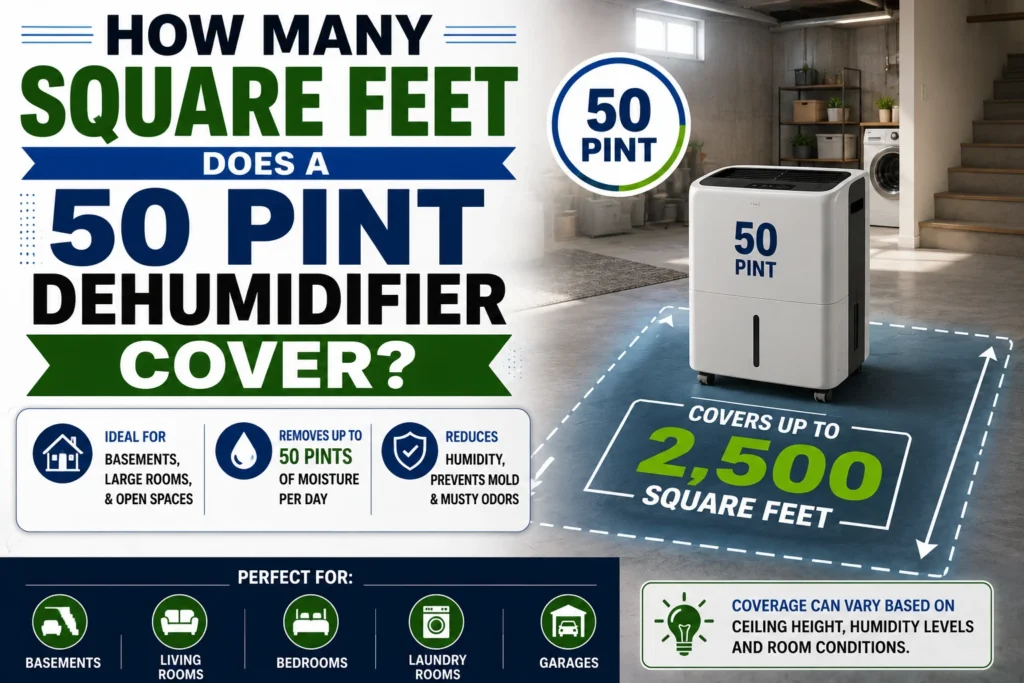
If you’re shopping for a dehumidifier, you may be wondering: how many square feet does a 50-pint dehumidifier cover?
In most cases, a 50-pint dehumidifier can effectively cover:
About 3,000 to 4,500 square feet.
However, the actual coverage depends on several factors, including:
A damp basement will require a more powerful unit than a mildly humid living room.
In this guide, you’ll learn how much space a 50-pint dehumidifier can handle and how to choose the right size for your home.
A typical 50-pint dehumidifier covers:
| Humidity Level | Coverage Area |
|---|---|
| Slightly damp | Up to 4,500 sq ft |
| Moderately damp | 3,500–4,000 sq ft |
| Very damp | 3,000–3,500 sq ft |
Most manufacturers rate 50-pint models for spaces around 4,000 square feet.
The “50-pint” rating refers to the amount of moisture the unit can remove from the air in a 24-hour period.
A 50-pint dehumidifier can remove:
That equals:
Here are common recommendations for a 50-pint unit:
| Area Type | Recommended Coverage |
| Large basement | 3,000–4,000 sq ft |
| Entire home | Up to 4,500 sq ft |
| Garage | 2,500–3,500 sq ft |
| Warehouse | Up to 4,000 sq ft |
Coverage varies depending on moisture levels.
A dehumidifier’s performance depends on:
Extremely humid spaces require more capacity.
Higher ceilings increase the volume of air.
Warm air holds more moisture.
Open floor plans allow better circulation.
Poor insulation can increase humidity.
Yes. A 50-pint dehumidifier is one of the most popular choices for:
It can usually handle spaces between 1,500 and 4,000 square feet, depending on moisture levels.
| Dehumidifier Size | Approximate Coverage |
| 20-pint | 500–1,500 sq ft |
| 35-pint | 1,500–3,000 sq ft |
| 50-pint | 3,000–4,500 sq ft |
Choosing the correct size improves efficiency.
You may need a bigger unit if you notice:
A dehumidifier that is too small will run continuously.
Most 50-pint models use:
Actual energy consumption depends on:
ENERGY STAR models can reduce electricity costs.
To get the best performance:
Proper placement improves moisture removal.
Most 50-pint dehumidifiers cover 3,000–4,500 square feet.
Yes. It is ideal for most medium and large basements.
It means the unit can remove 50 pints of water from the air every 24 hours.
In some cases, yes—especially in smaller homes with good airflow.
Yes. Very humid spaces reduce the effective coverage area.
Most models use 500–800 watts.
Not necessarily. Oversized units may cycle too frequently in smaller rooms.
A 50-pint dehumidifier typically covers between 3,000 and 4,500 square feet, making it an excellent choice for large basements, garages, and even some entire homes.
Before buying, consider your room size, humidity level, and airflow to ensure you choose the right unit for your space.
Every property listing uses the same phrase: “set on a one-acre lot.” It sounds generous…

If you’re planning to build a basketball court, comparing gym sizes, estimating flooring requirements, or…
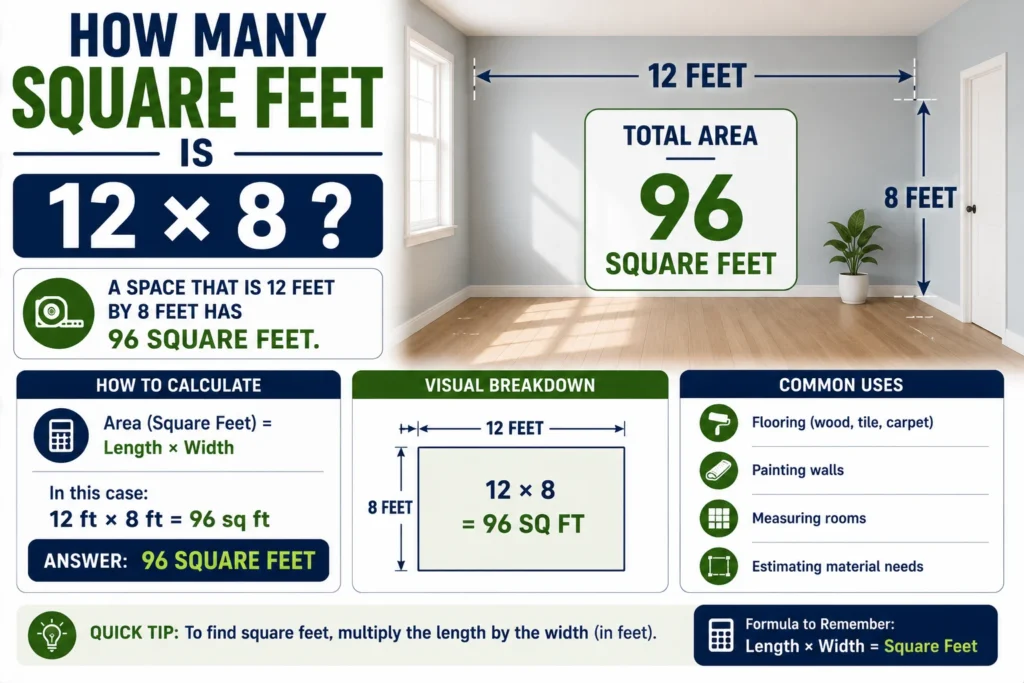
If you’re trying to determine how many square feet is 12 × 8, the calculation…