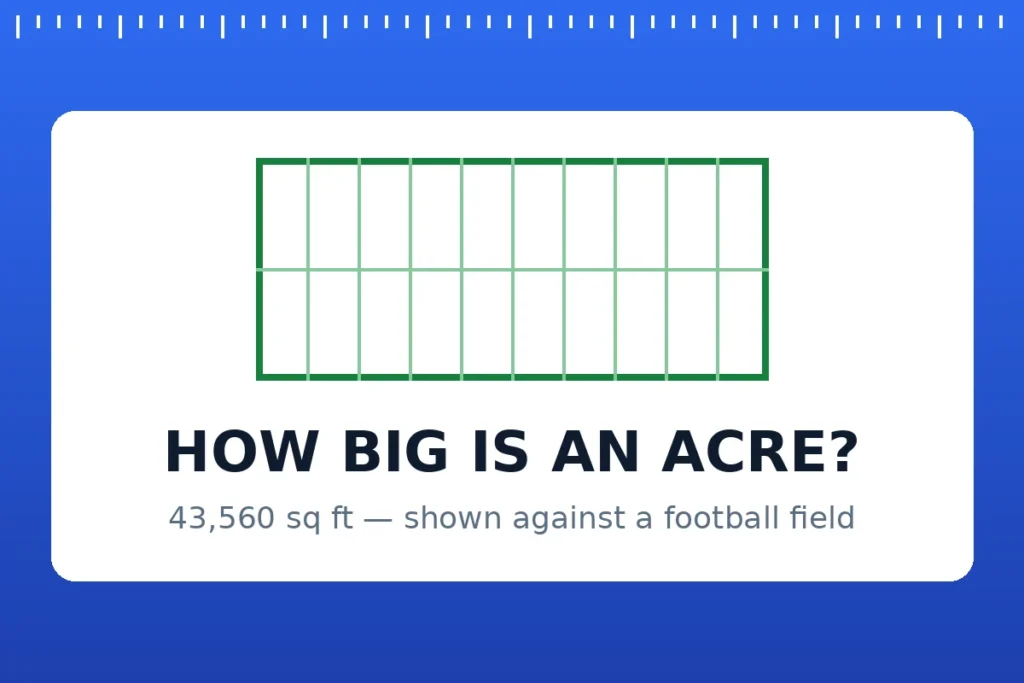
How Big Is an Acre? Visual Guide with Comparisons
Every property listing uses the same phrase: “set on a one-acre lot.” It sounds generous…
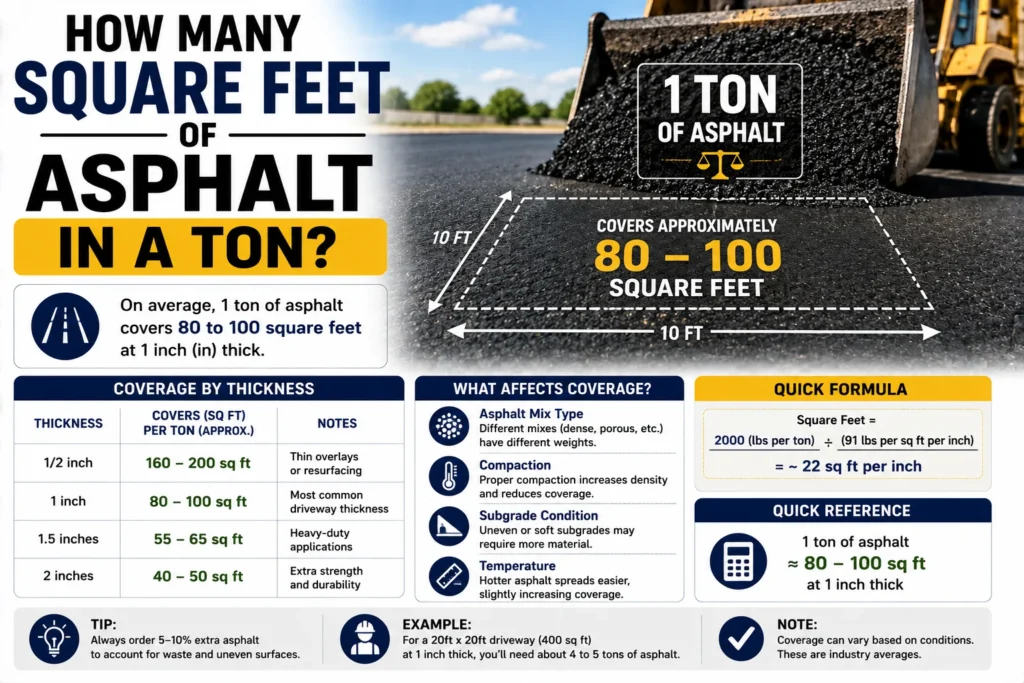
If you’re planning an asphalt driveway, parking area, or road project, one of the first questions you may ask is how many square feet of asphalt are in a ton.
The answer depends primarily on asphalt thickness. A ton of asphalt does not cover a fixed number of square feet because a thicker pavement layer requires more material per square foot.
As a general estimate, one ton of asphalt can cover approximately 30–80 square feet, depending on the depth of the asphalt layer. At a common compacted thickness of 2 inches, one ton may cover roughly 80 square feet. At 3 inches, the same ton may cover around 53 square feet, while a 4-inch layer may cover approximately 40 square feet.
The actual coverage varies because asphalt density, mix type, compaction, temperature, and job conditions can affect the amount required.
For typical hot-mix asphalt, approximate coverage is:
| Asphalt Thickness | Approximate Coverage per Ton |
|---|---|
| 1 inch | 80–100 sq ft |
| 2 inches | 40–50 sq ft |
| 3 inches | 27–35 sq ft |
| 4 inches | 20–25 sq ft |
Important: These are simplified planning estimates. Actual asphalt coverage should be calculated using the specific mix’s density and the required compacted thickness.
A commonly used estimating figure is approximately:
For an accurate project estimate, your asphalt supplier or paving contractor should provide the appropriate tonnage based on the specified mix and compacted depth.
Asphalt coverage is directly related to thickness.
Imagine spreading one ton of asphalt over a large area. If you spread it thinly, it covers more square feet. If you spread it thickly, it covers fewer square feet.
For example:
This is why simply asking how many square feet are in a ton isn’t enough to determine how much asphalt you need.
You must know the desired pavement thickness.
The basic calculation involves three measurements:
V=lwh
V=4×3×2=24
l
l
w
w
h
hl = 4h = 2w = 3
Give feedback
First, calculate the volume of asphalt required:
Volume = Area × Thickness
Make sure the thickness is converted into feet.
For example, 2 inches equals:
2 ÷ 12 = 0.167 feet
For a 1,000-square-foot driveway:
1,000 × 0.167 ≈ 167 cubic feet
You then convert the volume into tons using the asphalt mix’s density.
Because asphalt density varies, the exact result should come from the supplier’s specifications.
At approximately 1 inch thick, one ton of asphalt may cover around:
The actual amount depends on density and compaction.
A thinner asphalt layer allows the same amount of material to cover a larger surface area.
However, the appropriate pavement thickness depends on the intended use and existing base.
At a compacted thickness of approximately 2 inches, one ton of asphalt may cover roughly:
A commonly used estimating figure is approximately 46–50 square feet per ton for a 2-inch layer, depending on asphalt density.
For example, if you need to pave 1,000 square feet at 2 inches thick, you may need roughly:
The final quantity should be confirmed using the specific asphalt mix density.
At approximately 3 inches thick, one ton may cover around:
Because the asphalt layer is 50% thicker than a 2-inch layer, considerably more material is required per square foot.
For a 1,000-square-foot area, a rough estimate might be around:
depending on the material’s density.
At 4 inches thick, one ton of asphalt may cover approximately:
Four inches requires approximately twice as much asphalt per square foot as a 2-inch layer.
For a 1,000-square-foot area, you might need approximately:
depending on the mix density and compaction requirements.
Here’s a convenient planning table:
| Thickness | Approximate Coverage per Ton |
|---|---|
| 1 inch | 80–100 sq ft |
| 1.5 inches | 55–65 sq ft |
| 2 inches | 40–50 sq ft |
| 2.5 inches | 32–40 sq ft |
| 3 inches | 27–35 sq ft |
| 3.5 inches | 23–29 sq ft |
| 4 inches | 20–25 sq ft |
| 5 inches | 16–20 sq ft |
| 6 inches | 13–17 sq ft |
These ranges are for general estimating. Always use the density supplied by the asphalt producer for a more accurate calculation.
The required amount depends on thickness.
At approximately 2 inches thick, a rough estimate could be:
At 3 inches:
At 4 inches:
These numbers are estimates rather than universal quantities.
For a 500-square-foot area at approximately 2 inches thick, you might need around:
At 3 inches:
At 4 inches:
The exact tonnage depends on the density and whether the specified thickness is measured before or after compaction.
A 1,000-square-foot area is a useful example.
Approximate requirements might be:
| Thickness | Approximate Asphalt Needed |
|---|---|
| 1 inch | 10–12 tons |
| 2 inches | 20–24 tons |
| 3 inches | 30–36 tons |
| 4 inches | 40–48 tons |
These are planning ranges, not engineering specifications.
The actual requirement may differ depending on the asphalt mix’s unit weight.
To estimate asphalt for a driveway, you need to know:
For a rectangular driveway:
Area = Length × Width
For example, a driveway measuring 20 feet × 50 feet has:
20 × 50 = 1,000 square feet
You can then estimate the asphalt tonnage based on the desired thickness.
Suppose you have a:
The area is:
20 × 50 = 1,000 square feet
At approximately 2 inches, a rough estimate could be around 20–24 tons of asphalt.
However, this assumes the base is already prepared and the asphalt thickness is the intended compacted thickness.
Yes.
Asphalt is not always the same density.
Density can vary based on:
For this reason, two different asphalt mixes can have slightly different weights for the same volume.
That’s why professional estimates often use the supplier’s specific tons-per-cubic-yard or pounds-per-cubic-foot information.
Square feet measure area.
Cubic feet measure volume.
Tons measure weight.
These are different measurements.
To determine how many tons of asphalt you need, you essentially convert:
Area → Volume → Weight
For example:
Square feet × thickness = cubic feet
Then:
Cubic feet × asphalt density = pounds
Finally:
Pounds ÷ 2,000 = tons
This process produces a much more reliable estimate than simply assuming a fixed number of square feet per ton.
The exact weight varies by asphalt mix, but a cubic yard of compacted asphalt commonly weighs roughly 2 tons or somewhat more.
Because asphalt density varies, don’t use one universal conversion for a final contractor order.
If your supplier provides the density in pounds per cubic foot, you can calculate the required tonnage directly.
The appropriate asphalt thickness isn’t the same for every project.
A residential driveway may have different structural requirements from:
Traffic volume, vehicle weight, soil conditions, drainage, and base construction all affect pavement design.
Therefore, more asphalt isn’t automatically better, and thinner asphalt isn’t necessarily appropriate just because it reduces cost.
For estimating purposes, a 2-inch compacted asphalt layer may require roughly 0.04–0.05 tons per square foot.
That means:
≈ 4–5 tons
≈ 20–25 tons
≈ 40–50 tons
However, these figures illustrate why density and thickness need to be carefully specified. Asphalt tonnage estimates should be checked against the actual mix density because simplified rules can differ from supplier calculations.
A useful formula for estimating coverage is:
Coverage (sq ft) = Asphalt Weight ÷ (Density × Thickness)
For practical estimating, thickness should be expressed in feet and density in pounds per cubic foot.
For example, if:
the calculated coverage will be in the neighborhood of 80 square feet.
The exact answer changes with the density used.
Freshly placed asphalt and compacted asphalt don’t necessarily have the same dimensions or density.
Asphalt is rolled and compacted during installation to create the required pavement structure.
Compaction affects:
Therefore, a contractor shouldn’t simply order material based on the loose volume without accounting for the specified finished pavement.
Some additional material may be needed to account for:
However, the amount of extra material should be determined by the contractor or asphalt supplier.
Ordering too little can delay a project, while ordering substantially too much can increase costs.
The biggest mistake is assuming one ton always covers the same area.
It doesn’t.
Square feet measure surface area, while cubic feet measure volume.
Different mixes can have different densities.
The finished thickness matters, not simply the loose material depth.
Break irregular driveways or parking lots into smaller rectangles or other simple shapes before calculating the total area.
For a significant paving project, use the asphalt supplier’s or contractor’s material calculation for the final order.
If your driveway isn’t rectangular, divide it into sections.
For example, suppose your driveway consists of:
Total area:
500 + 300 + 200 = 1,000 square feet
You can then calculate asphalt requirements based on the total area and desired thickness.
This method works for many irregular parking areas and driveways.
Suppose you have:
Area: 2,000 square feet
Thickness: 2 inches
Convert thickness:
2 ÷ 12 = 0.167 feet
Calculate volume:
2,000 × 0.167 ≈ 334 cubic feet
Then multiply by the asphalt’s actual density to determine the weight.
Using a representative density of approximately 145–150 pounds per cubic foot produces a result in the neighborhood of 24–25 tons.
The actual project quantity should be based on the supplier’s specified mix density and expected compaction.
At a 3-inch compacted thickness, a useful general estimate is:
A reasonable planning figure is around 30 square feet per ton, but actual coverage can vary.
For a final order, use the asphalt mix’s documented density rather than relying on a generic number.
At 4 inches thick, one ton may cover approximately:
A useful quick estimate is around 22–23 square feet per ton.
Again, the actual coverage depends on the asphalt mix and compaction.
For quick reference:
The thicker the asphalt, the smaller the area one ton can cover.
It depends on thickness. As a general estimate, one ton may cover around 40–50 square feet at 2 inches thick, approximately 27–35 square feet at 3 inches, and about 20–25 square feet at 4 inches.
A typical estimate is approximately 40–50 square feet, depending on asphalt density and compaction.
At 2 inches, a rough estimate is approximately 20–24 tons. At 3 inches, approximately 30–36 tons may be required. The exact amount depends on the mix density and specified finished thickness.
Approximately 27–35 square feet is a reasonable general range.
Calculate the driveway’s square footage, determine the required compacted thickness, and use the asphalt mix’s density to calculate tonnage. A paving contractor or supplier can provide the most accurate quantity.
Yes. Higher-density asphalt weighs more per unit of volume, so one ton will cover a somewhat smaller volume than a lower-density mix.
No. You also need the pavement thickness and an appropriate asphalt density. Square footage alone doesn’t tell you how many tons are required.
So, how many square feet of asphalt are in a ton?
There isn’t one fixed answer because asphalt coverage depends primarily on thickness and density.
As a general guide:
For example, a 1,000-square-foot area paved at 2 inches may require roughly 20–24 tons of asphalt, depending on the mix and compaction.
For accurate ordering, calculate the total area, specify the finished compacted thickness, and use the asphalt supplier’s actual density. This is especially important for large driveways, parking lots, and commercial paving projects where even a small estimating error can result in several tons of excess or insufficient material.
Every property listing uses the same phrase: “set on a one-acre lot.” It sounds generous…
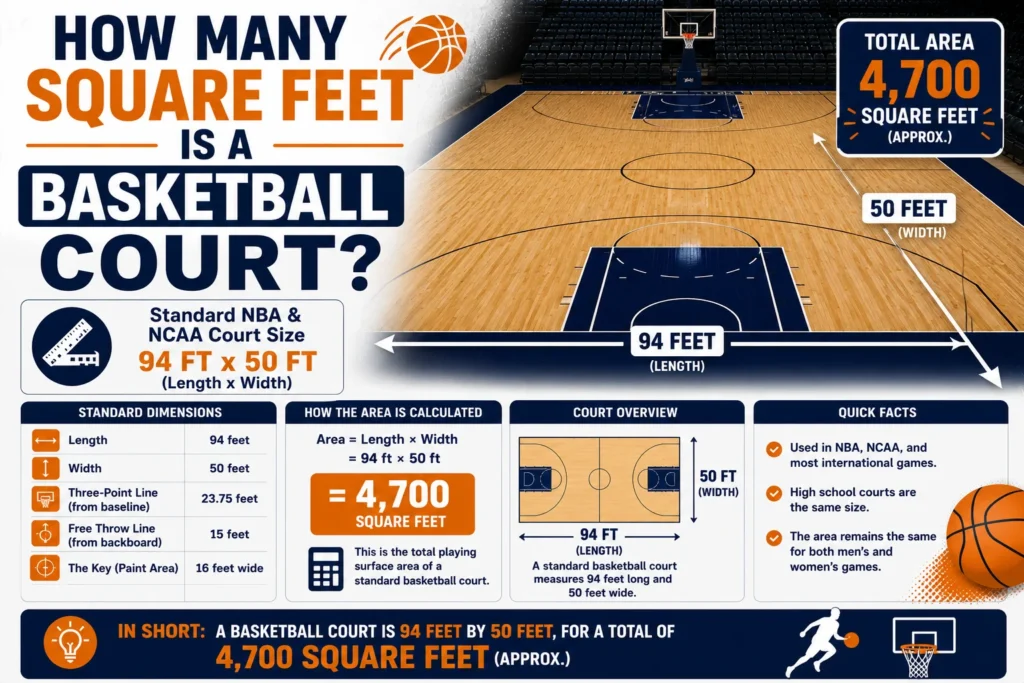
If you’re planning to build a basketball court, comparing gym sizes, estimating flooring requirements, or…
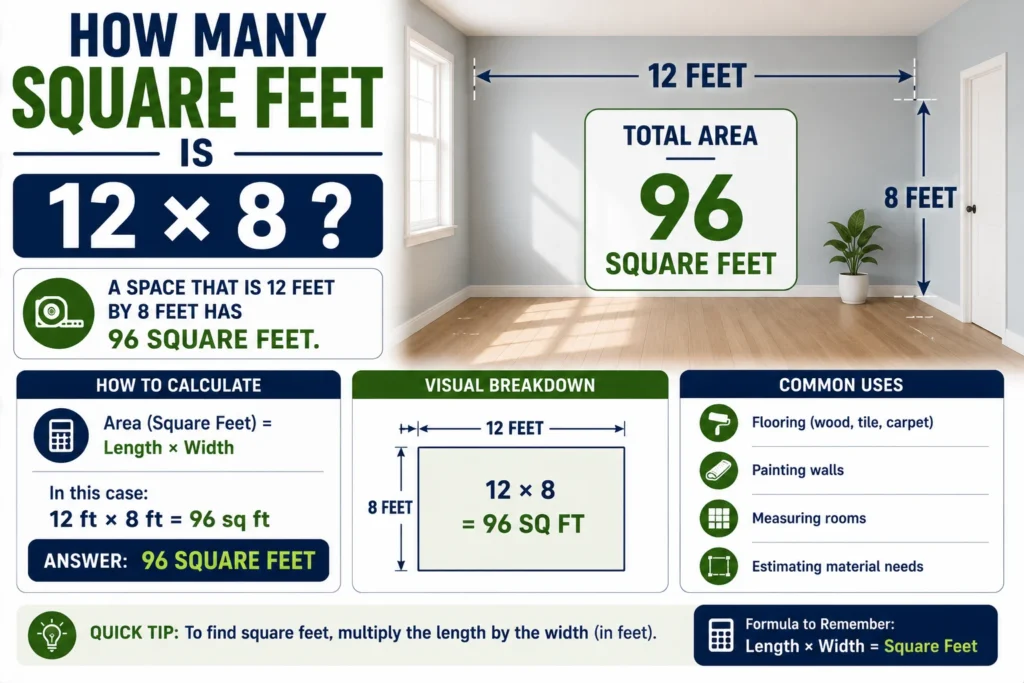
If you’re trying to determine how many square feet is 12 × 8, the calculation…