Tire Size Meaning: 225/45R17 Decoded + Load Index and Speed Rating Charts
Tire size meaning explained: 225/45R17 decoded step by step, load index and speed rating charts, overall diameter math,…
Quick Answer: The most used paper size in the US is Letter, 8.5 x 11 inches. The world standard is A4, 210 x 297 mm (8.27 x 11.69 inches). Letter is a little wider and shorter than A4, so the two are not interchangeable. For a Letter sheet, use a #10 envelope (4.125 x 9.5 inches) with the sheet folded in thirds. For A4, use a DL envelope (110 x 220 mm) folded in thirds, or a C4 envelope (229 x 324 mm) with no fold.
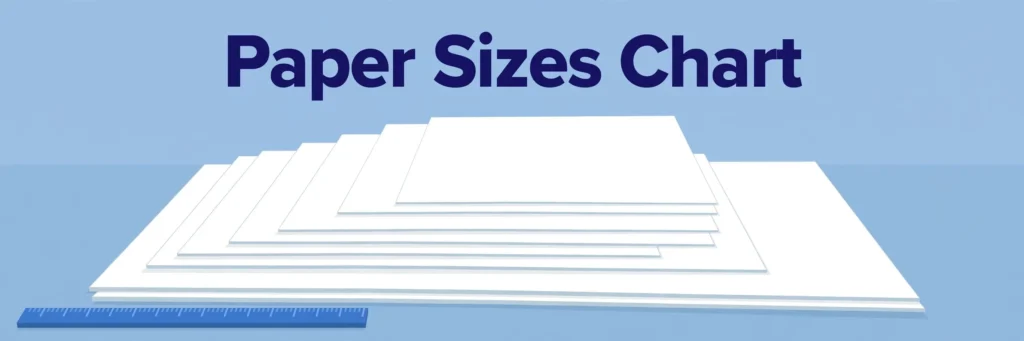
Paper sizes, drawn to the same scale
A5
5.8 x 8.3 in
A4
8.27 x 11.69 in
Letter
8.5 x 11 in
Legal
8.5 x 14 in
Tabloid
11 x 17 in
Heights and widths are proportional, so you can see at a glance how each size compares.
US paper sizes come from the ANSI/ASME system, and they are still the default in American offices, schools, and home printers. Letter is the size your printer expects unless you change the setting. Legal shows up in contracts and legal forms. Tabloid is the size of a small poster or a two-page spread.
| Size name | Inches | Millimetres | Where you see it |
|---|---|---|---|
| Letter | 8.5 x 11 | 216 x 279 | Resumes, school work, office documents, home printing |
| Legal | 8.5 x 14 | 216 x 356 | Contracts, legal forms, long agreements |
| Tabloid (Ledger) | 11 x 17 | 279 x 432 | Posters, spreadsheets, architectural drawings, menus |
| Junior Legal | 5 x 8 | 127 x 203 | Small notepads, index cards, pocket notebooks |
| Half Letter | 5.5 x 8.5 | 140 x 216 | Booklets, invitations, half-page handouts |
| Executive | 7.25 x 10.5 | 184 x 267 | Business letters, personal stationery |
One handy fact: Tabloid is exactly two Letter sheets side by side. That is why a Tabloid page folds neatly into a Letter booklet, and why copy shops price Tabloid prints as double Letter.
The ISO A series is used in almost every country outside the US and Canada. Its rule is simple and clever: every size is half the one above it, cut across the long side, and every size keeps the same shape ratio of 1 to the square root of 2. So an A4 sheet folded in half gives you A5, and two A5 sheets make one A4.
| Size | Millimetres | Inches | Common use |
|---|---|---|---|
| A0 | 841 x 1189 | 33.11 x 46.81 | Large posters, technical drawings |
| A1 | 594 x 841 | 23.39 x 33.11 | Flip charts, big posters |
| A2 | 420 x 594 | 16.54 x 23.39 | Medium posters, wall calendars |
| A3 | 297 x 420 | 11.69 x 16.54 | Posters, charts, large diagrams |
| A4 | 210 x 297 | 8.27 x 11.69 | Standard letters, forms, school work worldwide |
| A5 | 148 x 210 | 5.83 x 8.27 | Booklets, flyers, small notebooks |
| A6 | 105 x 148 | 4.13 x 5.83 | Postcards, pocket notebooks, save-the-date cards |
A4 is one sixteenth of a square metre, which is 623.7 square centimetres. That fixed area is why printers and paper sellers around the world can quote A4 by weight per square metre: standard copy paper is 80 gsm, and thicker card stock runs 250 to 350 gsm.
Letter measures 8.5 x 11 inches (216 x 279 mm). A4 measures 8.27 x 11.69 inches (210 x 297 mm). Put them side by side and the difference is easy to see: Letter is about a quarter inch wider, and A4 is about two thirds of an inch longer.
This is the cause of the classic printing headache. A document made for A4, printed on a US printer set to Letter, loses its bottom margin or gets shrunk to fit. A Letter document sent to a European printer gets extra white space at the bottom or a scaled-down print. Before you print an important file, check the page size in your document settings and match it to the paper in the tray.
Area tells the same story in numbers: a Letter sheet covers 93.5 square inches, while A4 covers about 96.7 square inches. Close, but not the same, and close is not good enough for a form with fixed boxes or a resume with tight margins.
An envelope must be a little bigger than the folded sheet it holds. The table below gives the standard match for each common sheet, so you never have to guess at the stationery aisle.
| Sheet | Fold | Envelope | Envelope size |
|---|---|---|---|
| US Letter (8.5 x 11) | In thirds | #10 business | 4.125 x 9.5 inches |
| US Letter (8.5 x 11) | In half | 9 x 12 catalog | 9 x 12 inches |
| A4 (210 x 297 mm) | None | C4 | 229 x 324 mm |
| A4 (210 x 297 mm) | In thirds | DL | 110 x 220 mm |
| A4 (210 x 297 mm) | In half | C5 | 162 x 229 mm |
| A5 (148 x 210 mm) | None | C5 | 162 x 229 mm |
| A5 (148 x 210 mm) | In half | C6 | 114 x 162 mm |
| 5 x 7 inch card | None | A7 invitation | 5.25 x 7.25 inches |
| 4.25 x 5.5 inch card | None | A2 invitation | 4.375 x 5.75 inches |
The #10 envelope is the one you see on business mail in the US. It takes a Letter sheet folded in thirds, which is why business letters are folded that way. The DL envelope does the same job for A4 in the rest of the world. For invitations, the rule is simple: the envelope is always a quarter inch bigger than the card on each side, which is why a 5 x 7 card goes in an A7 envelope.
Resume or job application in the US: Letter, always. Hiring managers print on Letter, and an A4 resume prints with a shrunk layout or a cut-off footer.
School or office work outside the US: A4. It is the default in Word, Google Docs, and every school printer in Europe, Asia, and Australia.
Poster or wall chart: A3 if you print at a copy shop, Tabloid if you print in a US office. Both are close in size, but A3 is a little larger.
Booklet or program: A5, or Half Letter in the US. Both are half of the standard sheet, so you print two pages per side and fold.
Photo print: Photo sizes are their own system (4 x 6, 5 x 7, 8 x 10 inches), so do not try to match them to Letter or A4. A 4 x 6 photo fits an A6 envelope, and a 5 x 7 photo fits an A7 envelope.
Most home printers cannot print to the very edge of the sheet. They leave an unprintable margin of about 0.2 inches (5 mm) on each side. If your design runs to the edge, set a margin of at least 0.25 inches, or use a copy shop with a full-bleed printer.
When a file is made for one size and printed on the other, your printer driver offers “Fit to page” or “Shrink to fit.” That option scales the whole document down, which changes font sizes and can push a two-page resume onto two pages with an almost-empty second page. The cleaner fix is to change the page size in the document itself before printing, then check the page count again.
If you measure a sheet and the numbers do not match any row in these charts, measure again with a ruler, not a tape measure, and check both sides: some “Letter” packs sold online are actually A4, and some notebooks labelled A5 are cut a few millimetres short. Our online ruler and printable ruler and fraction chart help you check a sheet in seconds, and the cm to inches converter turns any millimetre size into inches.
No. A4 is 210 x 297 mm (8.27 x 11.69 inches) and Letter is 8.5 x 11 inches (216 x 279 mm). Letter is wider, A4 is longer, and a document made for one will print slightly wrong on the other unless you change the page size first.
A #10 business envelope (4.125 x 9.5 inches) fits a Letter sheet folded in thirds. If you want no fold, use a 9 x 12 catalog envelope.
A C4 envelope (229 x 324 mm) fits A4 with no fold. A DL envelope (110 x 220 mm) fits A4 folded in thirds, and a C5 envelope (162 x 229 mm) fits A4 folded in half.
The US paper system grew out of old mill and printing traditions, while the ISO A series was designed in Germany in the 1920s around the halving rule. Both systems work fine on their own; the trouble only starts when a document crosses from one system to the other.
Try it: Try the CM & MM to Inches Converter to switch any paper size between mm and inches. CM & MM to Inches Converter
Tire size meaning explained: 225/45R17 decoded step by step, load index and speed rating charts, overall diameter math,…
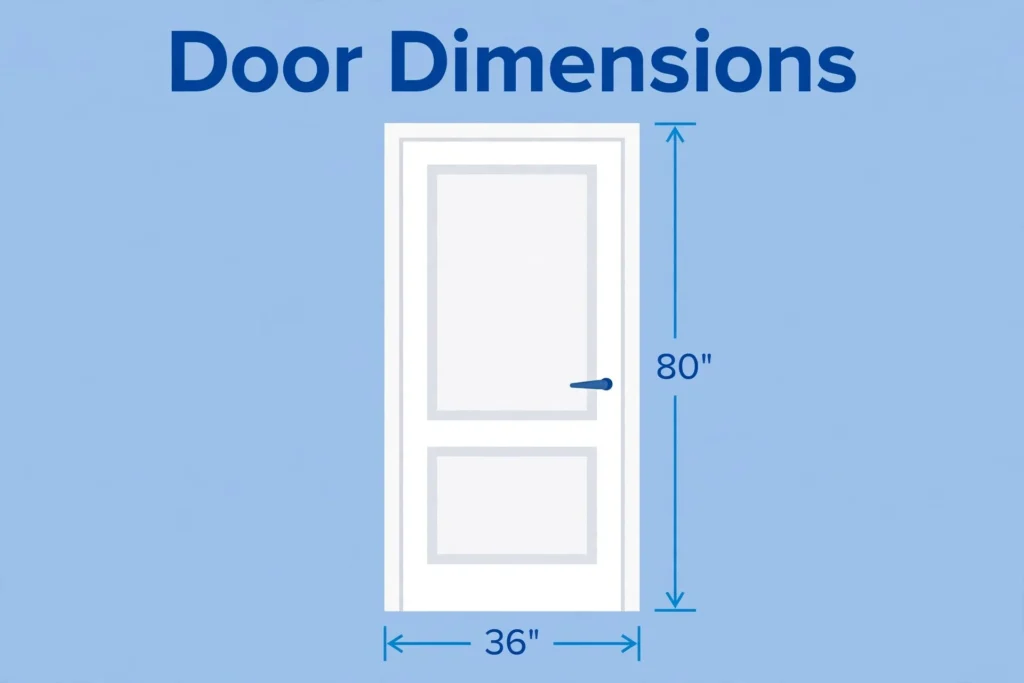
Standard door dimensions: interior 30 or 32 x 80 inches, front door 36 x 80, plus rough opening…
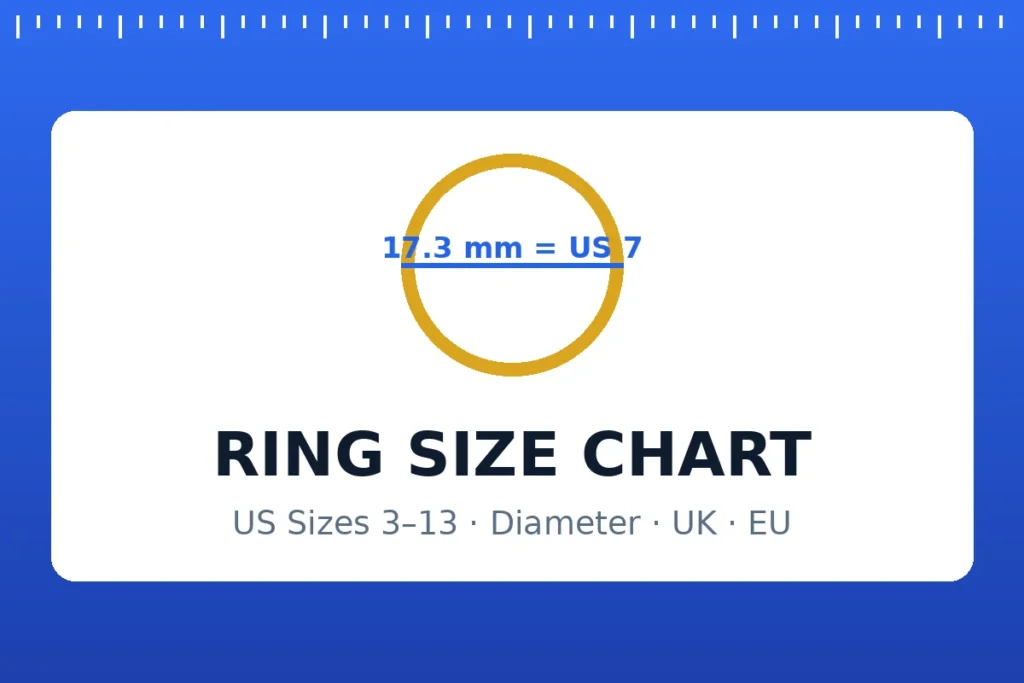
There is a particular kind of panic that only ring shopping produces. The ring is…